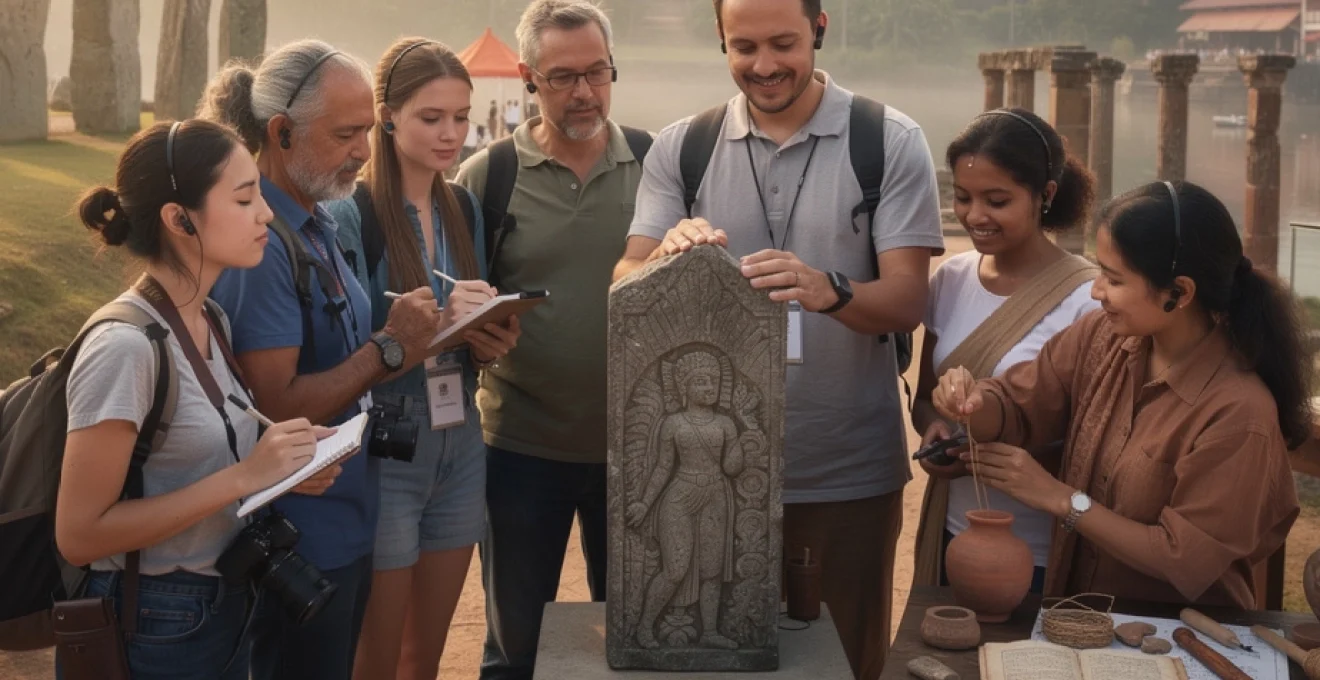
The transformative power of cultural heritage tourism extends far beyond conventional sightseeing, creating profound connections between travellers and the civilisations that shaped our world. When you stand before the ancient stones of Stonehenge or walk through the corridors of Angkor Wat, your brain undergoes complex neurological processes that enhance memory formation and cultural understanding. Modern research reveals that heritage tourism activates multiple cognitive pathways, triggering emotional responses that create lasting impressions and foster deeper cultural appreciation.
Heritage destinations offer unique opportunities for experiential learning that traditional education simply cannot replicate. Archaeological sites, living history museums, and UNESCO World Heritage locations serve as immersive classrooms where historical narratives come alive through multi-sensory experiences. This form of cultural engagement transcends passive observation, encouraging active participation in understanding how past civilisations lived, worked, and expressed their beliefs through art, architecture, and daily customs.
Cognitive tourism psychology: how heritage sites trigger emotional memory formation
The psychology behind heritage tourism reveals fascinating insights into how our minds process cultural information. When you encounter historic landmarks, your brain simultaneously processes visual, auditory, and spatial information, creating rich neural networks that enhance memory retention. This phenomenon occurs because heritage sites provide contextual learning environments where abstract historical concepts become tangible experiences.
Research indicates that visitors to heritage sites demonstrate significantly higher retention rates for historical information compared to classroom-based learning, with memory consolidation improvements of up to 70% when cultural experiences involve multiple sensory inputs.
Neuroplasticity enhancement through architectural immersion at stonehenge and angkor wat
Architectural immersion at iconic sites like Stonehenge and Angkor Wat stimulates neuroplasticity through what cognitive scientists term environmental cognition. The scale, proportion, and historical significance of these structures trigger neurological responses that enhance spatial reasoning and cultural pattern recognition. Your brain adapts to processing complex architectural relationships while simultaneously contextualising historical periods and cultural achievements.
The massive scale of Angkor Wat, for instance, activates neural pathways associated with awe and wonder, releasing neurotransmitters that enhance memory formation. Similarly, the mysterious arrangement of Stonehenge’s megaliths challenges conventional spatial understanding, encouraging cognitive flexibility and creative thinking. These experiences literally reshape neural connections, creating lasting improvements in cultural comprehension and historical empathy.
Cultural schema development via tactile engagement with ancient artefacts
Tactile engagement with historical artefacts creates powerful cognitive schemas that organise cultural knowledge in meaningful patterns. When museum guides allow you to handle replica pottery or ancient tools, your brain develops haptic memory traces that connect physical sensations with historical contexts. This multisensory approach to learning activates the somatosensory cortex alongside traditional learning centres, creating robust memory networks.
Cultural schema development through tactile experiences helps you understand how ancient peoples solved practical problems, expressed artistic vision, and maintained social structures. The weight of a bronze age tool, the texture of medieval parchment, or the intricate carving patterns on religious sculptures provide insights that visual observation alone cannot deliver. These hands-on experiences become foundational elements for understanding cultural evolution and technological progress across civilisations.
Episodic memory consolidation through Multi-Sensory historical narratives
Multi-sensory historical narratives at heritage sites create powerful episodic memories that persist far longer than traditional learning experiences. When you hear period music while exploring a medieval castle, smell authentic cooking fires at a living history demonstration, or feel the cool stone of ancient temple walls, your brain encodes these experiences as vivid episodes rather than abstract facts.
This consolidation process involves the hippocampus working in conjunction with sensory processing centres to create detailed memory engrams. The result is enhanced recall ability that allows you to access historical information through multiple cognitive pathways. These rich episodic memories serve as mental anchors for broader cultural understanding, making historical periods feel personally relevant and emotionally meaningful.
Dopamine release mechanisms in UNESCO world heritage site exploration
Exploring UNESCO World Heritage sites triggers significant dopamine release through discovery and accomplishment mechanisms. The anticipation of encountering world-renowned
monuments or finally reaching a viewpoint after a demanding ascent engages the brain’s reward circuitry in a way similar to solving a complex puzzle. This dopamine surge not only produces feelings of joy and satisfaction, it also tags the experience as important, increasing the likelihood that you will remember both the emotions and the historical details associated with the place.
From a cultural tourism psychology perspective, this reward response is amplified when exploration involves active problem-solving. Navigating ancient streets in a historic quarter, decoding symbolic carvings in temple reliefs, or piecing together a site’s story from interpretive panels all create micro “eureka” moments. Each small discovery reinforces your intrinsic motivation to keep learning, turning a simple visit into a self-sustaining loop of curiosity, engagement, and long-term cultural appreciation.
Experiential learning methodologies in cultural heritage tourism
Cultural heritage tours function as living laboratories for experiential learning, where theories from educational psychology are applied in real-world settings. Instead of passively receiving information, you construct meaning through direct interaction with historic landmarks, local communities, and curated narratives. This process aligns closely with modern approaches to experiential learning, in which knowledge is built through doing, reflecting, and applying insights to new contexts.
Many leading heritage destinations now design visitor experiences using structured pedagogical models. They combine guided interpretation, hands-on activities, and opportunities for self-directed exploration to accommodate different learning styles. As a result, heritage tourism has become a powerful extension of lifelong learning, allowing you to deepen historical understanding in ways that traditional lectures or textbooks seldom achieve.
Constructivist learning frameworks at living history museums like williamsburg
Living history museums such as Colonial Williamsburg or Plimoth Patuxet exemplify constructivist learning in action. Rather than simply showing you objects behind glass, these institutions recreate entire environments—streetscapes, workshops, farms—where costumed interpreters perform daily tasks as they would have centuries ago. You learn by engaging, asking questions, and observing how historical systems functioned as integrated wholes.
Within a constructivist framework, you are encouraged to form your own interpretations of the past, guided but not dictated by curatorial narratives. For example, watching a blacksmith demonstrate traditional metalworking invites you to infer the economic, social, and technological implications of that craft. This active meaning-making process mirrors how the brain naturally learns from experience, making cultural heritage tours at such sites especially effective for deep, long-term retention.
Interpretive tourism strategies for archaeological site comprehension
Archaeological sites can be visually impressive yet cognitively opaque without effective interpretation. Modern interpretive tourism strategies bridge this gap by using layered storytelling, visual aids, and participatory activities to help you decode complex ruins. Clear wayfinding, annotated maps, and phased reconstructions allow you to visualise how a site evolved over centuries, turning scattered stones into coherent narratives about urban planning, religion, and power.
Many destinations now employ multimedia guides, on-site archaeologists, and interactive models to explain excavation methods and dating techniques. By revealing the scientific processes behind discovery—carbon dating, stratigraphy, material analysis—heritage tours not only tell you what happened, but how we know it happened. This dual focus strengthens critical thinking and helps you evaluate historical claims with a more discerning, evidence-based mindset.
Scaffolded historical understanding through expert-guided tours
Expert-guided tours provide cognitive scaffolding that makes complex histories more accessible. Skilled guides sequence information from simple to complex, linking what you already know to new concepts in a logical progression. They highlight key vantage points, draw attention to overlooked details, and adapt narratives in real time based on your questions and prior knowledge.
This scaffolding is particularly valuable at multi-period sites like Rome’s Forum or Istanbul’s Hagia Sophia, where overlapping eras can be confusing. A knowledgeable guide helps you disentangle Roman, Byzantine, Ottoman, and modern layers, building a mental timeline that anchors each structure in its proper context. Over time, this structured exposure to diverse histories enhances your ability to independently interpret other historic landmarks you encounter.
Metacognitive skill development via cross-cultural heritage comparison
When you visit several heritage sites across different regions, you naturally begin to compare architectural styles, ritual practices, and social systems. This comparative process is a form of metacognition: you reflect on how you think about culture, question your assumptions, and refine your personal frameworks for understanding the past. Asking yourself, “Why does this temple feel different from the one I saw in Cambodia?” initiates a deeper examination of belief systems, climate, materials, and historical context.
Such cross-cultural comparison also highlights your own cultural filters. You may notice, for instance, that you initially evaluate unfamiliar customs using standards from home, then consciously reframe your interpretation as you gain more information. This ability to monitor and adjust your thinking—core to metacognitive skill development—makes you not only a more informed traveller but also a more flexible and empathetic global citizen.
Authentic cultural immersion techniques beyond conventional sightseeing
While famous monuments and museums are essential anchors of cultural heritage tourism, authentic immersion often occurs in less formal spaces. Neighbourhood markets, village festivals, community workshops, and family-run guesthouses offer direct access to living traditions that do not always appear in guidebooks. By engaging with these everyday environments, you move beyond “checking off” attractions and start participating in the ongoing story of a place.
To achieve this level of immersion, it helps to approach travel with an ethnographic mindset. Instead of treating local people as background scenery, you see them as experts in their own culture. Simple acts—learning a few phrases in the local language, asking permission before photographing rituals, or joining community events with humility—can transform your experience from observer to welcomed guest.
Ethnographic research methods for traveller-community integration
Adopting basic ethnographic research methods can deepen your connection with host communities during cultural heritage tours. Participant observation—quietly watching daily routines in a tea house, public square, or temple courtyard—helps you notice subtle patterns of behaviour and social interaction. Informal interviews, such as open-ended conversations with artisans, guides, or elders, allow you to hear first-hand narratives that rarely appear in official histories.
Keeping a reflective travel journal further enhances this process. When you record not only what you see, but also your assumptions and emotional reactions, you begin to recognise how your background shapes interpretation. Over time, this self-awareness fosters more respectful engagement, as you learn to ask better questions, listen more attentively, and let community voices guide your understanding of their own heritage.
Traditional craft workshops as cultural knowledge transfer mechanisms
Participating in traditional craft workshops—pottery in Morocco, weaving in Peru, calligraphy in Japan—offers a powerful bridge between heritage preservation and personal experience. These sessions are not mere souvenirs-making activities; they are structured forms of cultural knowledge transfer. As you learn techniques passed down through generations, you also absorb stories about symbolism, resource use, and community identity embedded in each craft.
Because these workshops rely on muscle memory and focused attention, they engage different cognitive pathways than passive observation. Struggling to control a loom shuttle or carve a precise motif gives you a visceral appreciation for the skill and time behind objects you might otherwise overlook in a museum. In many destinations, fees from such workshops directly support local artisans, creating a more sustainable and equitable heritage tourism economy.
Local storytelling traditions and oral history preservation practices
In many cultures, oral storytelling remains the primary vehicle for transmitting heritage. Listening to a griot recount West African epics, a Maori elder share ancestral voyaging tales, or a Celtic storyteller perform legends by a fireside offers insights that no guidebook can match. These narratives are dynamic; they adapt to audience, place, and time, demonstrating how cultural memory is continuously reshaped rather than frozen in the past.
By seeking out local storytelling events or arranging meetings with community historians, you contribute to the preservation of these fragile traditions. Recording stories with permission, supporting local cultural centres, and sharing responsibly curated accounts when you return home all help keep oral histories alive. You also gain a more nuanced sense of place, as personal testimonies reveal how major historical events affected individual lives.
Ceremonial participation protocols in sacred sites like varanasi and delphi
Many of the world’s most important historic landmarks, such as Varanasi’s ghats or Delphi’s ancient sanctuary, remain active sacred sites. Participating respectfully in ceremonies here can be profoundly moving, but it requires careful attention to local protocols. Before joining a ritual bath, lighting a candle, or entering an inner shrine, it is vital to understand dress codes, behavioural expectations, and any areas reserved exclusively for worshippers.
A good approach is to observe first, ask questions of local guides or custodians, and follow the lead of community members rather than other tourists. When done with humility, such participation can create powerful emotional connections, as you experience living traditions rather than viewing them from behind a barrier. At the same time, recognising boundaries—knowing when to step back, refrain from photography, or decline participation—demonstrates respect and helps ensure that spiritual practices are not reduced to mere tourist performances.
Digital heritage technologies transforming historical site engagement
Advances in digital heritage technologies are revolutionising how travellers interact with historic landmarks. Augmented reality (AR) apps, for example, can overlay reconstructions of vanished buildings onto ruins, letting you “see” a Roman forum or a medieval fortress as it once appeared. Virtual reality (VR) experiences extend this further by allowing you to explore inaccessible or fragile sites from a controlled environment, reducing physical impact while increasing interpretive depth.
These tools also personalise cultural heritage tourism. Location-aware audio guides adjust commentary to your pace and interests, while interactive touchscreens in museums let you zoom into high-resolution images of manuscripts or artworks that would be impossible to examine closely in person. For younger visitors raised in digital ecosystems, such technologies act as gateways into deeper historical engagement, turning what might have felt like static displays into interactive narratives.
Behind the scenes, 3D scanning, photogrammetry, and digital archiving help preserve vulnerable heritage for future generations. High-precision models of statues, temples, and entire cityscapes create backups that can be studied by researchers and, if needed, used to guide restoration after disasters. When you encounter these technologies during your travels—whether through projection mapping on a cathedral facade or an AR-enhanced museum exhibit—you are not just being entertained; you are witnessing an evolving collaboration between conservation science and public education.
Sustainable heritage tourism impact on local community preservation
As interest in cultural heritage tours grows, so does the responsibility to ensure that this form of travel benefits, rather than burdens, host communities. Sustainable heritage tourism recognises that historic landmarks are not isolated attractions; they are embedded in living social and ecological systems. Responsible planning aims to balance visitor numbers with site capacity, protect fragile environments, and ensure that economic gains are shared fairly with local residents.
Well-designed heritage tourism can fund the conservation of buildings, landscapes, and intangible traditions that might otherwise be lost. Entrance fees, community-based homestays, and locally managed guiding services generate income that supports restoration projects and cultural programming. In many regions, younger generations are encouraged to remain or return to their home communities because heritage-related jobs offer dignified, meaningful work that connects them to their roots.
However, the opposite can occur if tourism is unmanaged. Overtourism can drive up living costs, displace residents, and transform historic neighbourhoods into stage sets devoid of everyday life. As travellers, we can mitigate these risks by visiting in shoulder seasons, choosing locally owned accommodations, and respecting rules designed to protect sites—from staying on marked paths to adhering to photography restrictions. By aligning our choices with sustainable principles, we help ensure that the places we love remain vibrant for those who live there as well as those who visit.
Cross-cultural competency development through historic landmark exploration
Exploring historic landmarks across different countries is one of the most effective ways to build cross-cultural competency. Each site you visit offers a case study in how societies have grappled with universal themes—power, faith, migration, conflict, creativity—through their own lenses. As you compare these responses, you begin to appreciate both the diversity and the underlying commonality of human experience.
Heritage travel repeatedly places you in situations where norms differ from your own: different approaches to time, hospitality, public space, or religious observance. Navigating these differences in real time develops skills that are highly valued in global workplaces and multicultural communities: active listening, adaptability, perspective-taking, and non-judgmental communication. Over time, your “cultural comfort zone” expands, making you more confident and respectful when engaging with people from varied backgrounds.
Perhaps most importantly, cultural heritage tourism encourages humility. Standing in front of ancient inscriptions you cannot read, or in a temple whose rituals you barely understand, reminds you that your own worldview is just one among many. This realisation does not diminish your identity; instead, it situates it within a vast, interconnected human story. By seeking out and reflecting on such experiences, you turn each journey into training for a more empathetic, informed, and culturally fluent life.