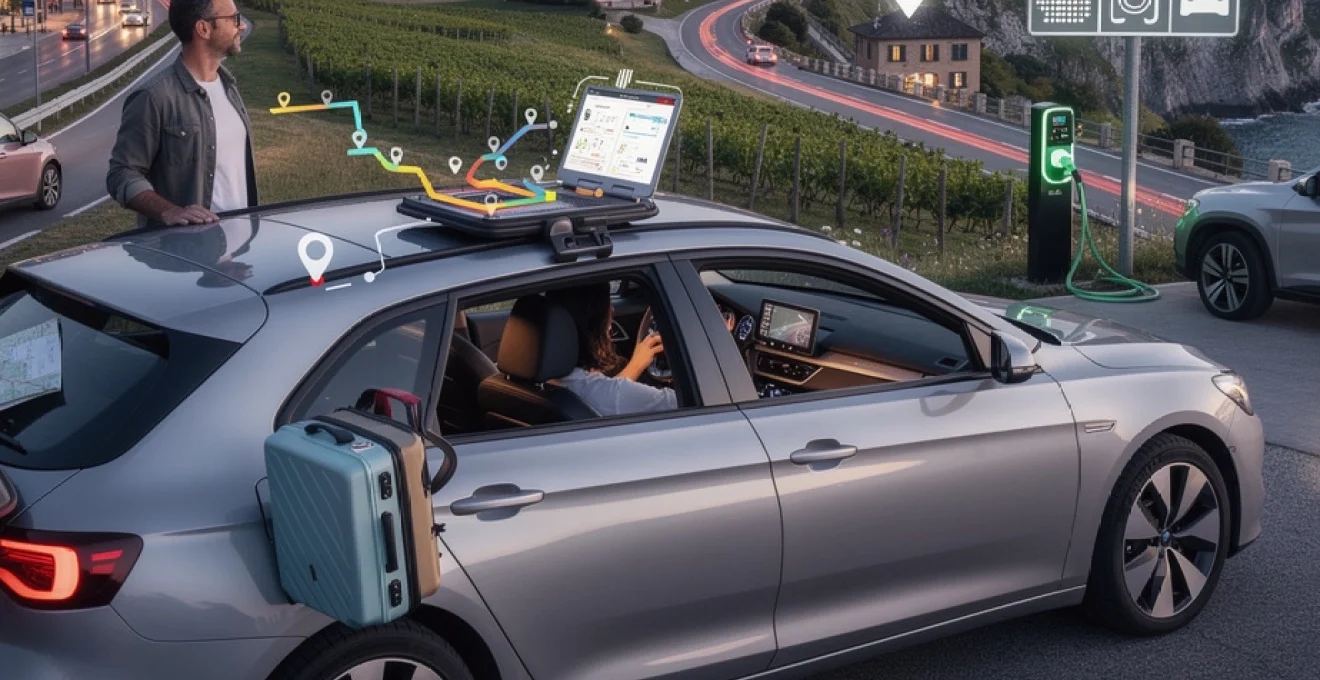
The allure of the open road has captivated travellers for generations, promising adventure, discovery, and the ultimate sense of freedom. In an era where package tours and rigid schedules dominate the travel landscape, creating your own itinerary with a rental car represents a return to authentic exploration. This approach transforms every journey into a personalised adventure, where spontaneous discoveries and hidden gems await around each bend. The freedom to deviate from predetermined routes, linger at captivating locations, and craft memories on your own terms has never been more accessible or rewarding.
Strategic route planning and GPS navigation systems for maximum itinerary flexibility
Modern navigation technology has revolutionised how travellers approach route planning, offering unprecedented flexibility and real-time adaptability. Strategic route planning begins with understanding your destination’s geography, climate patterns, and seasonal variations. Effective itinerary creation requires balancing must-see attractions with spontaneous exploration opportunities, ensuring your rental car journey maximises both planned experiences and serendipitous discoveries.
Dynamic route optimization using google maps and waze Real-Time data
Google Maps and Waze have transformed navigation from static directions into dynamic, intelligent route guidance systems. These platforms utilise crowd-sourced traffic data, construction updates, and accident reports to continuously optimise your journey. Real-time rerouting capabilities mean your carefully planned itinerary remains flexible, automatically adjusting to unexpected road conditions or traffic congestion.
The integration of artificial intelligence in these navigation systems learns from user patterns and preferences, suggesting alternative routes that align with your travel style. Whether you prefer scenic backroads or efficient motorway travel, these platforms adapt to your choices, creating a personalised navigation experience that enhances your rental car adventure.
Offline navigation solutions: HERE WeGo and maps.me for remote destinations
Remote destinations often present connectivity challenges that can disrupt digital navigation systems. HERE WeGo and Maps.me address these limitations by offering comprehensive offline mapping capabilities. These applications allow you to download detailed maps before departure, ensuring reliable navigation even in areas with poor mobile coverage or expensive roaming charges.
The offline functionality becomes particularly valuable when exploring rural landscapes, mountain regions, or international destinations where data connectivity may be unreliable. Preparedness through offline mapping ensures your rental car itinerary remains on track regardless of technical limitations, providing peace of mind for adventurous travellers venturing beyond well-connected urban areas.
Multi-stop journey planning through TripIt and roadtrippers applications
Complex itineraries involving multiple destinations require sophisticated planning tools that can organise accommodations, attractions, and route optimisation simultaneously. TripIt excels at consolidating travel confirmations, creating comprehensive itinerary overviews that synchronise with your rental car journey. The platform automatically organises booking confirmations, creating a centralised travel dashboard accessible across all devices.
Roadtrippers specialises in discovering attractions along your planned route, revealing hidden gems and interesting stops that might otherwise remain undiscovered. The application’s database includes local restaurants, historical landmarks, natural wonders, and cultural attractions, transforming your rental car journey into an educational and entertaining experience.
Scenic route discovery via designated tourist routes and byways
Designated scenic byways represent some of the world’s most spectacular driving experiences, carefully curated to showcase natural beauty, historical significance, and cultural heritage. These established routes provide structure for your rental car itinerary while maintaining flexibility for spontaneous exploration. Popular examples include Scotland’s North Coast 500, Germany’s Romantic Road, and America’s Blue Ridge Parkway.
Tourist route designation typically indicates superior road maintenance, strategically placed viewpoints, and comprehensive signage that enhances the driving experience. Scenic route integration into your itinerary ensures memorable driving experiences while providing reliable infrastructure for safe and enjoyable travel.
Vehicle selection criteria for different terrain and weather conditions
Selecting the appropriate rental vehicle directly impacts your itinerary’s feasibility and enjoyment level. Different terrains, weather conditions, and passenger requirements demand specific vehicle capabilities that enhance safety, comfort, and accessibility. Understanding these requirements before booking ensures your chosen vehicle complements your planned itinerary rather than limiting
your options. From compact city cars to rugged SUVs and spacious estate vehicles, each category offers strengths and limitations that will influence how freely you can follow your dream itinerary. By aligning your rental choice with expected road conditions, climate, luggage volume, and driving distances, you ensure that the vehicle supports your plans rather than forcing you to compromise on routes, timings, or comfort.
Compact cars for urban exploration: volkswagen polo and ford fiesta analysis
Compact rental cars such as the Volkswagen Polo and Ford Fiesta are ideally suited to dense urban environments, historic town centres, and tight parking spaces. Their smaller footprint allows you to navigate narrow streets, restricted zones, and multi-storey car parks with confidence, reducing the stress often associated with city driving. For travellers focused on exploring cultural landmarks, museums, and nightlife within major cities, compact vehicles offer an excellent balance between manoeuvrability and fuel efficiency.
From a cost perspective, compact cars generally deliver superior fuel economy and lower daily rental rates, helping you stretch your travel budget further. Despite their size, modern models like the Polo and Fiesta often include advanced safety features, smartphone integration, and efficient climate control, making them more than capable of supporting multi-day itineraries. However, if you are travelling with more than two passengers or carrying bulky luggage, you may find interior space limited, particularly on longer journeys where comfort becomes a higher priority.
SUV rentals for mountain passes: nissan X-Trail and toyota RAV4 capabilities
Mountain passes, rural gravel roads, and variable weather conditions demand a more capable rental car, and this is where SUVs such as the Nissan X-Trail and Toyota RAV4 excel. Their higher ground clearance, robust suspension, and available all-wheel-drive systems provide added stability on winding alpine roads, snowy passes, or uneven surfaces. If your dream itinerary includes ski resorts, remote hiking trails, or scenic high-altitude viewpoints, an SUV can significantly enhance both safety and access.
Beyond capability, SUVs typically offer increased interior space for passengers and luggage, making them ideal for families or groups travelling with sports equipment, hiking gear, or winter clothing. Modern models often feature advanced driver-assistance systems, including hill descent control, lane-keeping assistance, and adaptive cruise control, which can reduce fatigue on long days behind the wheel. While fuel consumption is generally higher than that of compact cars, the added versatility and confidence in challenging conditions often justify the incremental cost for itineraries focused on mountainous or rural exploration.
Estate vehicle options for extended family tours: skoda octavia and BMW 3 series touring
Estate vehicles, such as the Skoda Octavia and BMW 3 Series Touring, provide an attractive middle ground between compact cars and SUVs for extended family tours. They combine car-like driving dynamics with generous boot space, enabling you to carry multiple suitcases, pushchairs, or sports equipment without sacrificing passenger comfort. For itineraries that involve long motorway stretches interspersed with city visits, estates offer a versatile and fuel-efficient solution.
The Skoda Octavia is widely regarded for its exceptional value, spacious interior, and efficient engines, making it a popular choice for budget-conscious families. In contrast, the BMW 3 Series Touring emphasises driving refinement, premium materials, and advanced infotainment systems, appealing to travellers who value comfort and performance during long-distance drives. Both options allow you to maintain flexibility in your itinerary, switching seamlessly between urban sightseeing, countryside excursions, and cross-border travel without needing to compromise on storage capacity or ride quality.
Electric vehicle infrastructure planning: tesla model 3 and charging network access
Electric vehicle (EV) rentals, particularly models like the Tesla Model 3, are becoming increasingly popular for travellers seeking sustainable road trips without sacrificing performance. However, integrating an EV into your dream itinerary requires more strategic planning than a conventional petrol or diesel car. Range considerations, charging station availability, and charging speeds all influence how freely you can adapt your schedule, especially when travelling across multiple regions or countries.
Many European routes are now well served by fast-charging networks, including Tesla Superchargers and third-party providers such as Ionity, Allego, and Fastned. Before departure, it is advisable to map charging locations along your planned route and identify alternative options for unexpected detours. Most EVs feature built-in navigation systems that incorporate real-time charger availability and estimated charging times, helping you integrate recharging stops into meal breaks or sightseeing pauses. With thoughtful infrastructure planning, an EV like the Tesla Model 3 can offer quiet, responsive driving and low running costs while still preserving the core benefit of rental car travel: complete itinerary freedom.
Accommodation booking strategies along flexible travel routes
Accommodation planning plays a crucial role in maintaining the flexibility that makes a rental car itinerary so appealing. Book too rigidly, and you may feel locked into a schedule that prevents spontaneous detours; leave everything to chance, and you risk limited availability or higher last-minute prices. The most effective strategy usually lies somewhere in between, combining a few pre-booked anchor nights with open gaps that allow you to adjust your route based on weather, local recommendations, or personal energy levels.
One effective approach is to book your first and last nights well in advance, particularly near major transport hubs such as airports or railway stations, where demand is consistently high. Intermediate nights can then be reserved a few days ahead using hotel comparison platforms or booking apps with flexible cancellation policies. This hybrid method preserves the sense of adventure that comes with driving a rental car while protecting you from the stress of having nowhere to stay after a long day on the road.
When designing a flexible travel route, location becomes as important as price or amenities in accommodation selection. Properties with on-site parking or easy access to public garages simplify arrival and departure, especially in historic city centres where street parking may be restricted. Rural stays such as farmhouses, guesthouses, and small inns often provide more spacious parking and a quieter environment, ideal after a day of navigating busy roads. By prioritising accommodation options that complement your daily driving distances and sightseeing goals, you ensure that each overnight stop supports, rather than disrupts, your overall itinerary.
Budget optimisation through Fuel-Efficient driving techniques and cost management
Even the most carefully planned dream itinerary can lose its appeal if travel costs spiral unexpectedly. Managing your budget while maintaining freedom of movement starts with understanding the key cost drivers of a rental car trip: daily rental rates, fuel expenditure, tolls, parking fees, and insurance. By adopting fuel-efficient driving techniques and making informed decisions about vehicle type, route selection, and timing, you can significantly reduce overall expenses without limiting your experiences.
Fuel-efficient driving begins with smooth, anticipatory behaviour behind the wheel. Accelerating gently, maintaining steady speeds, and avoiding harsh braking can reduce fuel consumption by up to 15%, according to various European transport studies. Using cruise control on suitable motorway sections, checking tyre pressures regularly, and removing unnecessary weight from the boot further enhance efficiency. Small adjustments in driving style, multiplied across hundreds or thousands of kilometres, can translate into meaningful savings that you can reallocate towards accommodation upgrades, local dining, or additional activities.
Beyond fuel, strategic cost management includes planning routes that balance toll costs against time savings. In some countries, toll-free scenic roads offer comparable travel times to motorways while providing more interesting views, making them an attractive alternative when you are not pressed for time. Parking fees in major cities can also add up quickly; using park-and-ride facilities on the outskirts, choosing hotels with inclusive parking, or scheduling city visits outside peak times can all help you maintain control over your budget. By treating cost planning as an integral part of itinerary design, you preserve the sense of freedom that comes with a rental car while keeping financial surprises to a minimum.
Legal requirements and international driving documentation for Cross-Border travel
Cross-border travel by rental car offers unparalleled flexibility, but it also introduces additional legal and administrative considerations. Before setting off, it is essential to confirm that your rental agreement permits travel into all intended countries, as some providers restrict access to specific regions or impose additional fees. Failing to comply with these terms can invalidate insurance coverage, exposing you to significant financial risk in the event of an incident.
Most European countries recognise driving licences issued within the European Union, but travellers from outside the EU may require an International Driving Permit (IDP) in addition to their national licence. An IDP is effectively a multilingual translation of your licence and is often requested by rental agencies or traffic authorities, particularly in Eastern Europe or non-Schengen states. Checking local regulations well in advance ensures that you obtain any necessary documentation before departure, avoiding delays at rental desks or border crossings.
Vehicle documentation is equally important when planning a cross-border itinerary. Rental cars typically come with proof of registration, insurance certificates, and, where required, a green card or equivalent document demonstrating international insurance validity. Some countries enforce additional requirements, such as high-visibility vests, warning triangles, or specific environmental badges for entry into low-emission zones. Verifying that your rental car is equipped with mandatory safety items and that you understand local traffic rules helps you drive confidently from one country to another, maintaining the sense of seamless freedom that makes cross-border road trips so appealing.
Emergency preparedness and roadside assistance coverage across european networks
While most rental car journeys proceed without incident, responsible itinerary planning includes preparing for unexpected events. Mechanical breakdowns, flat tyres, minor collisions, or sudden health issues can occur even on the best-maintained routes. Knowing in advance how to respond, whom to contact, and what coverage you possess transforms potential crises into manageable inconveniences, allowing you to continue your journey with minimal disruption.
Comprehensive roadside assistance, often available as part of your rental package or as an optional upgrade, is a critical component of this preparedness. Coverage typically includes towing, on-the-spot repairs for minor issues, battery jump-starts, and replacement vehicles where necessary. Before leaving the rental depot, take a moment to store emergency contact numbers in your phone and note any specific procedures for reporting incidents, especially if you plan to cross national borders. Clarifying whether assistance extends across all countries on your route helps you avoid unpleasant surprises when you are far from your original pick-up location.
In addition to formal roadside support, carrying a small personal emergency kit can further enhance your resilience on the road. Items such as a first-aid kit, bottled water, snacks, a power bank for your phone, and printed copies of key documents provide an extra safety net if you are delayed or temporarily out of mobile coverage. Many travellers also choose to download offline copies of insurance details and emergency numbers to ensure access in low-signal areas. By combining robust roadside assistance coverage with practical personal preparations, you safeguard the flexibility that makes rental car travel so attractive, ensuring that even unexpected challenges do not derail your dream itinerary.