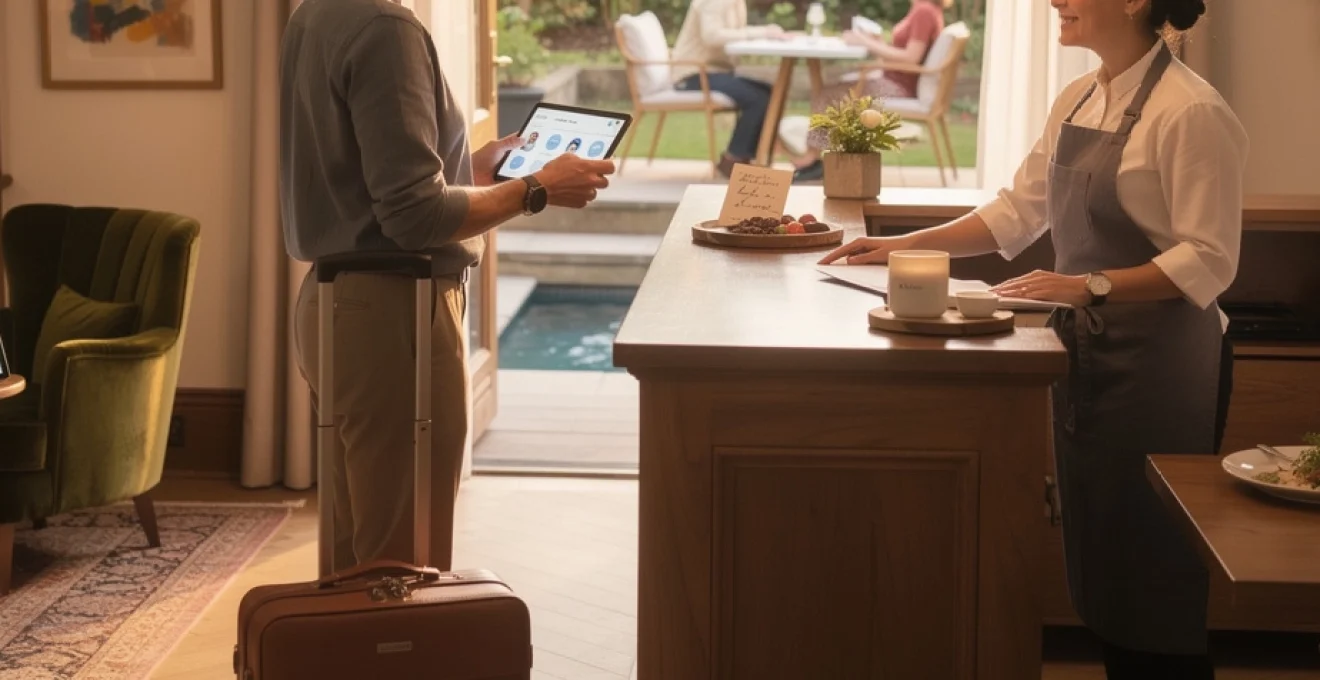
The hospitality landscape has undergone a remarkable transformation in recent years, with discerning travellers increasingly gravitating towards intimate, carefully curated accommodations rather than standardised chain hotels. This shift reflects a fundamental change in travel expectations, where authentic experiences and personal attention have become more valuable than generic luxury amenities. Boutique establishments have emerged as the antithesis to mass-market hospitality, offering thoughtfully designed spaces that prioritise individual guest preferences and create lasting memories through genuine human connection.
Modern travellers seek accommodations that serve as extensions of their personality and travel philosophy. Unlike corporate hotel chains that deliver predictable experiences across multiple locations, boutique properties celebrate uniqueness and local character. This approach resonates particularly well with millennials and Generation Z guests, who value authenticity and personalisation over standardised service protocols. The boutique hotel sector has responded by developing innovative service models that treat each guest as an individual rather than a room number.
Defining boutique accommodation characteristics and guest experience differentiation
Boutique accommodations distinguish themselves through several key characteristics that fundamentally alter the guest experience paradigm. These properties typically feature fewer than 100 rooms, allowing for intimate atmospheres where staff can develop genuine relationships with guests. The architectural design often incorporates unique elements that reflect local culture and history, creating environments that feel authentic rather than manufactured. Interior designers frequently collaborate with local artists and craftspeople to develop bespoke furnishings and artwork that cannot be replicated elsewhere.
The service philosophy in boutique establishments centres on anticipation rather than reaction. Staff members are trained to recognise subtle cues and preferences, enabling them to provide personalised recommendations and services before guests explicitly request them. This proactive approach extends beyond traditional concierge services to encompass every aspect of the guest journey, from arrival experiences to departure arrangements. The smaller scale allows for flexibility in service delivery that larger establishments simply cannot match.
Quality over quantity defines the boutique accommodation ethos. Rather than offering extensive amenity lists, these properties focus on delivering exceptional experiences through carefully selected services. A boutique hotel might feature a single restaurant with a renowned chef rather than multiple dining options of varying quality. This curation extends to partnerships with local businesses, cultural institutions, and service providers who share the property’s commitment to excellence and authenticity.
Personalised service delivery models in independent hospitality properties
Independent hospitality properties have revolutionised service delivery by implementing flexible operational models that prioritise guest satisfaction over standardised procedures. These establishments typically invest more heavily in staff training and development, creating teams capable of adapting to diverse guest needs and preferences. The service model emphasises emotional intelligence and cultural sensitivity, enabling staff to connect with guests from various backgrounds and travel motivations.
Concierge-level guest recognition systems and preference documentation
Sophisticated guest recognition systems form the backbone of personalised service delivery in boutique properties. These systems extend far beyond basic demographic information to capture nuanced preferences, dietary requirements, celebration dates, and even personal interests. Staff members are trained to discreetly observe and record guest behaviours, creating detailed profiles that enhance future stays. This information might include preferred room temperature settings, beverage choices, newspaper preferences, or specific pillow types.
The documentation process involves multiple touchpoints throughout the guest journey, from pre-arrival communications to post-departure follow-ups. Reception staff, housekeeping teams, and food service personnel all contribute to building comprehensive guest profiles. This collaborative approach ensures that preferences are recognised and implemented consistently across all departments. Many boutique properties use sophisticated customer relationship management systems that flag important guest information automatically, ensuring that returning visitors receive personalised treatment from the moment they arrive.
Bespoke amenity curation based on individual travel profiles
Boutique establishments excel at creating customised amenity packages that reflect individual guest profiles and travel purposes. Business travellers might find their rooms equipped with specific technology requirements, while leisure guests receive carefully selected local products that enhance their cultural exploration. The curation process involves analysing guest booking patterns, previous stay feedback, and expressed interests to create meaningful amenity collections.
Seasonal amenity adaptation represents another sophisticated approach to personalisation. Properties adjust their offerings based on weather conditions, local events, and cultural celebrations. A guest visiting during autumn might discover locally sourced artisanal preserves and warm beverages, while summer visitors receive sun care products and recommendations for outdoor activities.
By aligning amenities so closely with guest expectations, boutique hotels transform what might be a generic hotel stay into a narrative that feels written just for you. This level of personalisation often becomes the detail travellers remember most vividly long after they have checked out.
Staff-to-guest ratio optimisation in properties like babington house and soho farmhouse
One of the most tangible advantages of boutique stays is the enhanced staff-to-guest ratio. Properties such as Babington House in Somerset or Soho Farmhouse in Oxfordshire illustrate how a higher concentration of attentive, well-trained staff can radically improve the guest journey. Fewer rooms and a deliberate cap on occupancy give teams the capacity to respond thoughtfully rather than simply efficiently.
In practice, this means team members are not just executing tasks but actively stewarding each stay. At Babington House, for example, the same staff may see you at breakfast, by the pool, and later in the evening, building rapport and understanding your preferences in real time. At Soho Farmhouse, roving host teams, drivers, and spa staff coordinate seamlessly, so your movements across the estate feel choreographed rather than transactional.
This optimised staff presence enhances personalised travel experiences in subtle but important ways. Guests rarely need to queue, repeat requests, or wait long for assistance. Instead, you experience a sense of calm and control, similar to being hosted in a well-run private home rather than a large commercial property. The result is more meaningful interaction, less friction, and a comfort level that encourages you to fully relax into the stay.
Real-time guest request fulfilment and custom experience design
Beyond pre-arrival planning, boutique hotels excel at adapting in the moment. Real-time request fulfilment is no longer a “nice to have” but a core part of the personalised service promise. Whether you decide at breakfast that you would like a last-minute massage, or you suddenly feel like a private yoga class at sunset, independent properties are structured to accommodate spontaneous shifts in your itinerary.
Many boutique stays empower frontline staff to make on-the-spot decisions without waiting for managerial sign-off. This means you are not told “we will check and get back to you” but instead given options and solutions within minutes. It is similar to having a dedicated personal assistant: you simply articulate a need, and the property orchestrates the logistics behind the scenes.
Custom experience design extends this responsiveness into more complex arrangements. Perhaps you mention an interest in contemporary art over dinner. By the next morning, the concierge may have organised a private gallery tour or a studio visit with a local artist. Because boutique properties are less constrained by rigid corporate protocols, they can adjust staffing, space usage, and partnerships to create one-off experiences that would be impossible in a highly standardised hotel environment.
Architectural intimacy and spatial design philosophy in boutique properties
The physical layout of a boutique property plays a central role in how personal your stay feels. Architectural intimacy is not simply about smaller spaces; it is about spaces crafted with intent, where flow, proportion, and material choices support both privacy and connection. While large chain hotels often prioritise efficiency and capacity, boutique hotels focus on character, atmosphere, and a strong sense of place.
This design philosophy affects everything from how you move through the building to how you interact with staff and other guests. Corridors are shorter, public spaces more human in scale, and rooms often have idiosyncratic layouts that reflect the building’s history. Rather than feeling like one of hundreds passing through a lobby, you have the sense of inhabiting a carefully composed environment where every corner has a story.
Room count limitations and enhanced privacy positioning at the zetter townhouse
Room count is one of the clearest ways boutique properties signal their commitment to intimacy. Take The Zetter Townhouse in London as an example. With a relatively small number of rooms, the hotel can position itself as a discreet retreat rather than a high-volume operation. Fewer keys in circulation mean fewer people sharing corridors, lifts, and communal spaces at any given time.
This limited capacity directly enhances privacy and personalisation. Staff are more likely to recognise you on sight, greet you by name, and manage your movements with subtle care. You notice the absence of crowds: no congested breakfast buffets, no queues at reception, no struggle to find a quiet corner to work or unwind. For travellers who value tranquillity and a feeling of seclusion, this alone can be a deciding factor.
From a design perspective, properties like The Zetter Townhouse can also allocate more square footage to each guest, whether through generous room layouts or spacious lounges and bars. Instead of squeezing additional floors into a footprint, the emphasis shifts to comfort, sound insulation, and careful zoning. You are effectively “buying” not just a bed for the night but a more controlled, serene environment tailored to reflective, restorative stays.
Locally-sourced interior design elements and regional artistic integration
Another defining trait of boutique accommodation is its commitment to local design language. Rather than importing generic artwork and furniture, many independent properties collaborate with regional artisans, galleries, and craftspeople to shape the interiors. This can include hand-thrown ceramics in the restaurant, textiles woven by local makers, or photography that documents the surrounding neighbourhood.
For guests, this approach creates a richer, more immersive travel narrative. Instead of staying in a “placeless” room that could be in any city, you are surrounded by visual cues that root you in the destination. The result is similar to walking through a curated exhibition: every object feels intentional, and many have a story behind them if you take the time to ask.
Locally-sourced interiors also support sustainable and community-focused travel. Money spent on décor circulates back into the local economy, and visiting artists often gain exposure through in-room catalogues or small on-site boutiques. As a traveller, you gain the opportunity to bring home meaningful pieces that extend your connection to the place long after departure.
Common area configuration for organic social interaction at sketch london
While Sketch in London is primarily known as a dining and arts destination rather than a traditional hotel, it illustrates a principle that many boutique stays embrace: the careful configuration of social spaces to encourage organic interaction. Instead of vast, impersonal lobbies, you find a series of smaller rooms, each with its own mood, seating style, and focal point.
Applied to boutique accommodation, this philosophy results in lounges, libraries, bars, and terraces designed for lingering rather than passing through. Seating clusters are arranged to make it easy to strike up conversation with fellow guests if you want to, yet still allow for solitude. Lighting is warmer and lower, acoustics are managed with soft furnishings, and background music is chosen to enhance, not overwhelm, the atmosphere.
This spatial choreography supports a different type of travel experience. You might start a conversation with another guest over a glass of wine, receive an off-the-guidebook restaurant tip from a local DJ playing in the bar, or attend a small cultural event hosted in the hotel’s salon. For solo travellers or remote workers, these informal encounters can become some of the most memorable aspects of a boutique stay.
Authentic heritage building conversions versus purpose-built intimate spaces
Boutique properties often fall into two broad architectural categories: heritage conversions and purpose-built intimate hotels. Both can offer highly personalised experiences, but they do so in distinct ways. Heritage conversions might occupy former townhouses, factories, or civic buildings, with original staircases, cornicing, or brickwork becoming character-defining features. Purpose-built properties, by contrast, are designed from the ground up with boutique hospitality in mind.
Staying in a converted heritage building can feel like stepping into a living chapter of the city’s history. You may sleep under high ceilings, walk across original tiled floors, or discover quirky room layouts created around existing structural elements. This sense of authenticity is difficult to replicate and often appeals to guests who want their accommodation to reflect the cultural layers of the destination.
Purpose-built boutique hotels leverage modern construction to optimise insulation, acoustics, technology integration, and accessibility without sacrificing personality. Architects can design intimate courtyards, layered public spaces, and clever sightlines that maximise natural light and privacy. Whether you choose a heritage conversion or a contemporary build, the common denominator is attention to human-scale design rather than anonymous, industrial efficiency.
Culinary personalisation and artisanal food service approaches
Culinary experiences are a major differentiator for boutique stays, often rivaling standalone restaurants in quality and creativity. Instead of standardised menus rolled out across dozens of properties, independent hotels treat food and drink as a core part of their identity. Menus are shorter but more focused, ingredients are more carefully sourced, and the ability to personalise dishes is significantly greater.
For guests, this means dining that feels like a continuation of the overall personalised travel experience. Breakfast can be tailored to your schedule and preferences, bar menus may reflect your favourite spirits, and kitchen teams are typically more open to off-menu requests. Dining becomes less of a mechanical necessity and more of a curated, sensory journey that expresses the local terroir.
Chef-guest interaction protocols and dietary accommodation flexibility
In boutique properties, the distance between chef and guest is often much smaller, both literally and figuratively. Open kitchens, chef’s counters, and regular floor walks allow culinary teams to interact directly with diners, gather feedback, and fine-tune offerings. This direct contact makes it easier for you to request adaptations, explore new flavours, or discuss specific dietary requirements without layers of communication.
Dietary accommodation in boutique hotels tends to go beyond simply providing a gluten-free or vegan option. Once your preferences are noted, kitchens can proactively design dishes that meet your needs while still feeling inventive and indulgent. If you are staying several nights, the chef may even vary your meals so you are not presented with the same limited choices each day.
This flexibility mirrors the personalised service you encounter elsewhere in the property. Rather than feeling like a complication, your dietary profile becomes another aspect of your individuality that the hotel embraces. The result is a dining experience that feels safe, inclusive, and genuinely tailored to you—a crucial factor for many modern travellers.
Local supplier partnership networks and seasonal menu adaptation
Artisanal and locally-sourced food is now a core expectation for many guests seeking a personalised travel experience. Boutique stays are well-positioned to deliver on this, as their smaller scale allows them to work closely with independent farmers, fishers, roasters, and vintners. Instead of committing to huge, uniform purchasing contracts, they can adjust suppliers seasonally and even weekly.
Seasonal menu adaptation is an area where this flexibility truly shines. Menus evolve with the harvest calendar, coastal catch, or regional festivals, meaning repeat guests rarely see the same dishes twice. You might enjoy asparagus and morels in spring, fresh berries and light seafood in summer, and slow-cooked game or root vegetables in winter, all sourced from within a relatively small radius.
For travellers interested in food culture, these partnerships offer an easy way to connect with the region without leaving the property. Many boutique hotels highlight their suppliers on menus, in-room literature, or through small tasting events. You are not only eating locally; you are learning the stories behind the flavours, which deepens your relationship with the destination.
In-room dining customisation beyond standard hotel service models
In many large hotels, in-room dining is functional but uninspired: a fixed menu, standard delivery times, and minimal scope for adaptation. Boutique properties tend to take a different approach, treating private dining as an extension of the restaurant experience. Menus can be flexed to suit your mood, timing can be arranged around your schedule, and presentation often receives the same attention as in the dining room.
Imagine returning from a late flight to find a light supper tailored to your preferences waiting in your room, or starting the day with a bespoke breakfast tray arranged precisely as you like it. Some boutique stays will even set up private tasting menus in-suite, complete with wine pairings and direct interaction with the sommelier or chef. For couples, families, or business travellers needing privacy, this level of customisation can be transformative.
Technologically, many independent hotels are adopting simple tools—messaging apps, QR-based menus, or in-room tablets—to streamline communication around in-room dining without losing the personal touch. You can detail your preferences in writing, ask questions, and receive suggestions, all while maintaining the sense of being personally looked after rather than ordering from a faceless system.
Farm-to-table implementation at properties like lime wood hotel
Farm-to-table concepts have become increasingly popular across hospitality, but boutique properties are often able to implement them in the most authentic way. Lime Wood Hotel in the New Forest, for instance, demonstrates how on-site kitchen gardens, local foraging, and close relationships with regional producers can turn a marketing phrase into a lived reality.
At Lime Wood, herbs, vegetables, and fruits are grown within the grounds, minimising the journey from soil to plate. Menu descriptions frequently highlight specific garden beds or nearby farms, giving diners a clear sense of provenance. Cooking classes, garden tours, and seasonal events invite guests into the process, turning them from observers into participants.
From a personalised travel perspective, this approach allows you to shape your stay around culinary discovery if you wish. You might spend one day exploring the forest with a forager, the next learning to cook with the day’s harvest, and the evening enjoying a multi-course tasting menu inspired by your experiences. Food becomes a narrative thread that ties together place, season, and personal memory.
Technology integration for enhanced guest recognition and preference management
While boutique hotels pride themselves on human connection, technology plays a discreet but powerful role in enabling personalised hospitality. Modern independent properties deploy guest experience platforms, CRM systems, and messaging tools to capture and act on information without making the process feel clinical. The aim is not to replace people but to give staff better context so interactions can be more intuitive and meaningful.
Pre-arrival, you might receive a short, well-designed questionnaire asking about your pillow preferences, arrival time, or interests. During the stay, staff log observations and updates in real time, ensuring that any team member you interact with has access to the latest details. After departure, this information stays attached to your profile, so your next visit begins where the last one ended rather than starting from zero.
Mobile technology enhances this further. Many boutique properties now offer optional app-based communication or WhatsApp-style messaging for quick questions and requests. This allows for real-time responsiveness—late check-out, spa availability, local recommendations—without requiring frequent trips to reception. Importantly, because team sizes are smaller, the person replying is often someone you have already met in person, maintaining continuity and trust.
Of course, the balance between data and discretion is critical. The most successful boutique stays are transparent about the information they store and use it sparingly, focusing on what tangibly improves your experience. When handled well, technology becomes like stage lighting in a theatre: mostly invisible, yet essential for ensuring every moment of your stay feels considered and personalised.
Market positioning against chain hotel standardisation and corporate hospitality models
All of these elements—service, design, food, and technology—feed into how boutique stays position themselves in a market still dominated by large chains. Rather than competing on scale, loyalty points, or strict uniformity, independent properties compete on depth of experience and emotional resonance. They are not selling a room so much as a story: the story of the building, the neighbourhood, the people who work there, and the guests who choose to return.
In traditional corporate hospitality models, consistency is often the primary value proposition. You know exactly what to expect from a brand, whether you are in New York, Paris, or Singapore. While this is comforting for some travellers, others now see it as a limitation. If every stay feels the same, where is the sense of discovery? Boutique hotels answer this question by embracing difference and celebrating unpredictability—in a controlled, guest-centric way.
From a pricing perspective, boutique properties may not always be cheaper than chain hotels, but they offer a different type of value. You are paying for time, attention, and individuality rather than for large-scale infrastructure or multi-national marketing. For many travellers, especially those combining leisure with remote work or slow travel, this trade-off feels more aligned with their priorities.
As traveller expectations continue to evolve, the contrast between personalised boutique stays and standardised chain hotels is likely to sharpen. Guests increasingly look for meaningful human contact, a strong sense of place, and the ability to shape their own narrative within a destination. Boutique properties, by design, are built to deliver exactly that—making them a compelling choice for anyone seeking a more personalised, memorable way to travel.