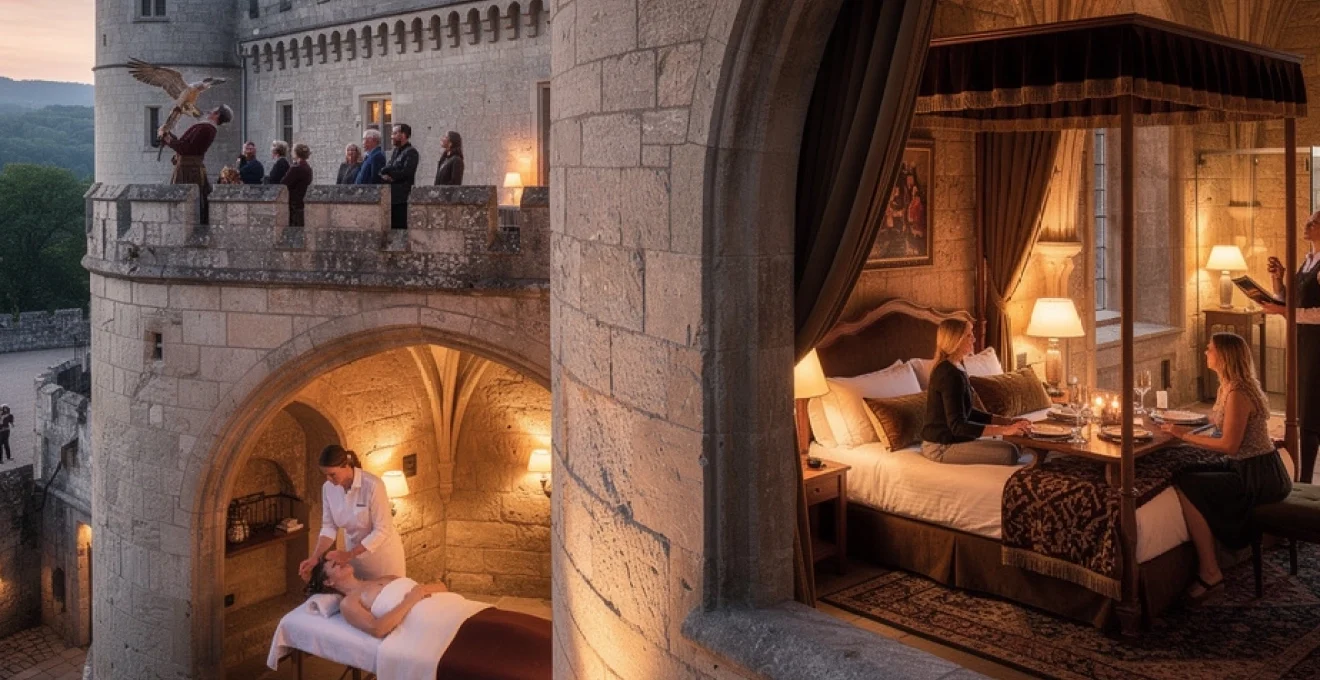
Staying in a historic castle represents one of the most extraordinary accommodation experiences available today, combining centuries of architectural heritage with contemporary luxury amenities. From the imposing Norman keeps of England to the fairytale turrets of Scottish Highland fortresses, castle hotels offer guests an unparalleled opportunity to immerse themselves in living history. These magnificent properties transform ancient strongholds into sophisticated hospitality venues whilst preserving their authentic medieval character and cultural significance.
The appeal of castle accommodations extends far beyond mere novelty, providing discerning travellers with access to unique architectural features, exclusive amenities, and immersive historical experiences that simply cannot be replicated in conventional hotels. Whether seeking a romantic retreat in a Tudor tower suite or planning a grand celebration in a baronial great hall, castle stays deliver an extraordinary blend of heritage preservation and modern hospitality excellence.
Medieval architecture and structural features of castle hotels
The architectural magnificence of castle hotels stems from centuries of strategic construction, defensive innovation, and aristocratic refinement. These properties showcase extraordinary structural elements that define their character and provide guests with authentic medieval experiences within luxury hospitality settings.
Norman keep foundations and tower accommodation design
Norman keeps form the architectural heart of many castle hotels, with their massive stone foundations supporting accommodation spaces that reach skyward through multiple levels. These imposing central towers, originally designed as last-resort defensive positions, now house some of the most exclusive guest suites available in European hospitality. The structural integrity of these ancient foundations allows modern engineers to create spectacular tower rooms whilst maintaining the authentic medieval atmosphere that guests seek.
Dover Castle’s Peverell’s Tower exemplifies this architectural transformation, where guests can stay within the actual medieval walls that once imprisoned enemies of the crown. The tower’s original defensive features, including narrow window slits and thick stone walls, create an intimate and historically authentic accommodation experience. Modern amenities are carefully integrated without compromising the structural integrity or visual authenticity of these remarkable Norman constructions.
Gothic revival elements in warwick castle hotel suites
Warwick Castle’s Tower Suites demonstrate how Gothic Revival architectural elements enhance the castle accommodation experience through dramatic visual impact and historical authenticity. The soaring pointed arches, ribbed vaulting, and ornate stone tracery create spectacular interior spaces that transport guests directly into medieval England. These architectural features are complemented by period-appropriate furnishings, including magnificent four-poster beds draped in regal tapestries and positioned beneath stunning stained glass windows.
The integration of Gothic Revival elements extends beyond mere decoration to influence the entire spatial experience of castle accommodation. High vaulted ceilings create a sense of grandeur and majesty, whilst the interplay of light and shadow through coloured glass windows provides ever-changing atmospheric effects throughout the day. These architectural choices establish an immersive historical environment that distinguishes castle hotels from any other luxury accommodation category.
Defensive wall integration in ashford castle room layouts
Ashford Castle demonstrates exceptional skill in integrating original defensive wall structures into contemporary room layouts without compromising either historical authenticity or modern comfort standards. The castle’s accommodation design works harmoniously with the existing fortification walls, creating unique room configurations that celebrate rather than disguise the property’s military heritage. Guest rooms feature original arrow slits transformed into distinctive window features, whilst maintaining the protective thickness that once defended against medieval sieges.
The room layouts at Ashford Castle showcase how defensive architecture can enhance rather than limit accommodation design possibilities. Thick stone walls provide exceptional sound insulation between guest rooms, creating peaceful private retreats within the bustling castle environment. Original wall passages and hidden staircases add elements of discovery and adventure to the guest experience, whilst modern climate control systems are discretely integrated within the ancient stonework to ensure optimal comfort throughout the seasons.
Original medieval stonework preservation techniques
Preserving original medieval stonework whilst creating luxury accommodation requires sophisticated conservation techniques that balance heritage protection with hospitality excellence. Castle hotels employ specialist craftsmen who understand traditional building methods and materials, ensuring that restoration work enhances rather than diminishes the authentic character of these historic properties. The preservation process involves careful documentation of existing stonework, assessment of structural integrity, and implementation of conservation strategies that protect original materials for future generations.
Modern preservation techniques
Modern preservation techniques often involve non-invasive surveying tools such as laser scanning and ground-penetrating radar to assess structural conditions without disturbing fragile masonry. Where stone replacement is unavoidable, conservation teams source compatible stone from original quarries wherever possible, matching colour, grain, and weathering patterns to maintain visual continuity. Lime-based mortars, rather than modern cement, are typically used to ensure the building can continue to “breathe” and manage moisture effectively. Many castle hotels work in partnership with heritage bodies and conservation architects, creating long-term maintenance plans that allow for both continued guest use and responsible preservation. The result is an environment where you can run your hand along centuries-old walls, confident that every visible stone has been carefully protected and documented.
Luxury amenities within historic fortification walls
Once primarily designed for defence, historic castles today rival leading city hotels in terms of luxury amenities and personalised service. Within these fortress walls you will often find Michelin-starred restaurants, sophisticated spa complexes, and exquisitely furnished suites, all subtly integrated into the medieval architecture. The experience of staying in castle accommodation is therefore not just about admiring ancient stonework; it is also about enjoying high-end comforts in a uniquely atmospheric setting. You might begin your day with a spa treatment in a former dungeon, dine in a great hall beneath chandeliers, and retire to a four-poster bed in a tower suite by evening. This blending of heritage and hospitality is what makes luxury castle hotels so compelling for modern travellers seeking something beyond a standard five-star stay.
Michelin-starred dining in great hall dining rooms
Many leading castle hotels have transformed their historic great halls into fine dining venues, where Michelin-starred or award-winning chefs reinterpret traditional recipes for contemporary palates. Long banqueting tables, soaring timber roofs, and vast fireplaces provide a dramatic backdrop for tasting menus that might feature local game, seasonal produce, and regional specialities. Dining in a great hall allows you to experience the same space where feudal lords once hosted lavish feasts and political negotiations, but with the benefit of sophisticated culinary techniques and impeccable service. Some properties pair each course with curated wine flights or offer whisky and cognac tastings in adjoining drawing rooms, enhancing the sense of occasion. For many guests, this fusion of haute cuisine and medieval architecture becomes the defining memory of their castle stay.
Spa treatments in converted dungeon chambers
One of the most striking examples of adaptive reuse in castle hotels is the transformation of dungeon areas and underground vaults into tranquil spa facilities. Spaces that once held prisoners or stored provisions now house treatment rooms, thermal suites, and hydrotherapy pools, taking advantage of naturally cool temperatures and thick stone walls for a cocoon-like atmosphere. Low lighting, candles, and carefully chosen aromatherapy scents soften the austere architecture, creating a serene retreat that contrasts with the castle’s imposing exterior. Therapies often draw inspiration from the local landscape, using herbs, seaweed, or peat from nearby regions in treatments that connect you to the surrounding environment. It is an almost poetic reversal: where the medieval experience of a dungeon meant confinement, the modern castle spa offers relaxation and release.
Four-poster bed configurations in tower suites
Sleeping in a four-poster bed within a turret or tower suite is perhaps the quintessential castle hotel experience. These beds are not only aesthetic centrepieces, draped in rich fabrics and adorned with carved headboards, but also practical responses to the unique geometry of medieval rooms. In circular or irregular spaces, designers carefully position four-poster beds to maximise both views and circulation, often aligning them with arrow slits or mullioned windows to frame dawn light. Canopies and heavy curtains, once used to insulate occupants from draughts, now serve primarily as atmospheric features that reinforce the sense of historical immersion. Many castle hotels offer themed suites named after past monarchs or noble families, where bed configurations and textiles reflect specific periods, giving you the sense of inhabiting a carefully curated chapter of history.
Modern bathroom installation in medieval turret rooms
Integrating modern bathrooms into turret rooms and tower suites poses one of the greatest technical challenges in castle accommodation design. Original walls cannot simply be cut through for new pipes or ventilation, so engineers often create “bathroom pods” that sit within existing spaces, leaving historic fabric largely untouched. Freestanding roll-top or clawfoot bathtubs are popular choices, both for their period feel and because they require fewer fixed connections to ancient masonry. Discreet underfloor heating compensates for cold stone surfaces, while concealed plumbing runs through existing service shafts or former chimneys to minimise visual impact. Guests benefit from contemporary water pressure, rainfall showers, and luxury toiletries, yet the overall bathroom aesthetic remains sympathetic to the medieval or Baroque character of the room.
Wi-fi infrastructure challenges in stone wall construction
Providing reliable Wi-Fi within castle hotels is more complex than in modern buildings, as metre-thick stone walls and vaulted ceilings significantly impede wireless signals. To address this, many properties rely on a network of carefully positioned access points, sometimes hidden within wooden panelling or disguised as period-appropriate fixtures to preserve visual authenticity. In some cases, wired connections are offered in key suites or business areas for guests who require stable high-speed internet for work. Castle operators must balance digital connectivity with heritage protection, avoiding intrusive cabling or drilling that could damage historic fabric. As a result, you may find that signal strength varies between rooms, and this minor compromise becomes part of the trade-off for staying within a genuine medieval stronghold rather than a newly built “castle-themed” hotel.
Authentic medieval experience programming
Beyond architecture and amenities, castle accommodations distinguish themselves through immersive activity programmes that bring medieval life vividly to the present. Rather than simply reading about history, you are invited to handle falconry gloves, learn archery, or dine by candlelight to the sound of lutes and storytelling. Many properties curate daily or seasonal schedules that blend educational content with entertainment, ensuring that families, couples, and history enthusiasts all find engaging options. These experiences are often led by trained interpreters, historians, or specialist instructors who can contextualise what you are seeing and doing. In effect, the castle becomes both a luxury hotel and a living museum, where you participate rather than merely observe.
Falconry demonstrations on castle battlements
Falconry has become a signature offering at many high-end castle hotels, particularly in Ireland, Scotland, and parts of France. Demonstrations typically take place on castle battlements or within inner courtyards, where dramatic backdrops enhance the spectacle of birds of prey swooping overhead. Under expert guidance, you may have the opportunity to don a leather gauntlet and call a hawk or owl to your arm, gaining a tactile sense of a skill once reserved for nobility. Instructors explain the historical role of falconry as both status symbol and practical hunting tool, linking your experience to centuries of aristocratic tradition. For many guests, this close interaction with birds in an authentic medieval setting is a highlight that connects nature, heritage, and adventure in a single moment.
Medieval banquet experiences with period entertainment
Many castle hotels host medieval-style banquets that recreate, in a carefully curated way, the feasting culture of the Middle Ages. Guests may be invited to dress in period-inspired attire, sit at long communal tables, and enjoy multi-course meals served with hearty wines, mead, or local ales. Entertainment often includes minstrels, jesters, storytellers, or reenactors who bring to life local legends and historical episodes associated with the castle. While health and safety standards mean you will not be eating exactly as people did centuries ago, menus often draw from archival recipes and regional ingredients to maintain a sense of authenticity. These banquets can be particularly memorable for group celebrations, as you share an evening that feels part theatre, part history lesson, and part fine-dining experience.
Archery lessons in original castle courtyards
Archery lessons are another popular activity offered by castle accommodations, often held in original courtyards or on former training grounds. Under the supervision of qualified instructors, you learn basic stance, draw, and release techniques, gaining an appreciation for the physical skill required of medieval archers. Safety protocols and modern equipment ensure that the experience is accessible even for complete beginners or younger guests. Instructors frequently weave in historical anecdotes about famous battles, longbow innovations, or the defensive strategies that once relied on expert archers. Practising this ancient martial art where soldiers once trained adds a tangible dimension to your understanding of medieval warfare and daily castle life.
Historical reenactment events at château de chambord
Across Europe, major castle sites such as Château de Chambord in France host large-scale historical reenactments that draw visitors from around the world. While Chambord functions primarily as a cultural monument rather than a full-service hotel, nearby château accommodations often package stays around these events, allowing guests to combine immersive history with luxury lodging. Reenactments may include costumed parades, staged battles, equestrian displays, and demonstrations of courtly life, all set against the backdrop of Chambord’s iconic French Renaissance architecture. For travellers staying in associated castle hotels, this creates a multi-layered experience: you might spend the day watching musketeers drill in the château grounds and the evening dining by candlelight in your own historic residence. Events like these highlight how castle tourism continues to evolve, blending scholarship, spectacle, and hospitality.
Premium castle hotel properties across europe
Europe offers a remarkable diversity of castle accommodations, ranging from rugged Scottish fortresses to refined Loire Valley châteaux and meticulously restored German schloss hotels. In the United Kingdom, properties such as Warwick Castle, Thornbury Castle, and Fenton Tower showcase the evolution of fortified residences into high-end hospitality venues. Ireland’s Ashford Castle exemplifies how an iconic estate can combine extensive grounds, world-class dining, and country pursuits within one integrated resort-style experience. On the continent, you will find castle hotels along the Rhine, in the Bavarian countryside, and throughout regions like Tuscany and Catalonia, each reflecting local building traditions and historical narratives. Choosing where to stay becomes less a question of star rating and more a matter of which era, landscape, or architectural style you most wish to inhabit for a few days.
When evaluating premium castle hotels, it is helpful to look beyond headline images and consider specific features that matter to you. Are you seeking an intimate, almost private experience in a small tower with only a handful of rooms, or do you prefer a larger estate with multiple restaurants, a spa, and extensive activity programmes? Some properties prioritise meticulous historical authenticity, retaining creaking floorboards and antique furnishings, while others lean into a lighter “fairytale” aesthetic with more overt modern comforts. Location also plays a crucial role: coastal castles like Pendennis and St Mawes in Cornwall offer sea views and beach access, whereas hilltop or riverside castles provide panoramic vistas of vineyards, forests, or medieval towns. By aligning your preferences with the character of each property, you can ensure your castle stay matches your expectations for romance, adventure, or quiet reflection.
Practical considerations for castle accommodation stays
While staying in a historic castle hotel is undeniably enchanting, it also comes with practical aspects that differ from standard city hotels. Room layouts can be unconventional, lifts may be limited or absent in certain towers, and some spaces retain quirks like uneven floors or narrow spiral staircases. If accessibility is a priority, it is wise to contact the property in advance to confirm step-free access, room locations, and bathroom configurations. Temperature can also vary more than in modern constructions, with thick stone walls keeping interiors cool in summer but sometimes requiring additional heating in winter months. Being aware of these characteristics helps you pack and plan appropriately, so the charm of the building enhances rather than surprises your stay.
Another factor to consider is the balance between privacy and heritage tourism. Many castle hotels operate within or adjacent to popular visitor attractions, meaning day guests may be touring parts of the property during opening hours. Premium suites, such as Warwick Castle’s tower accommodations or Dover Castle’s Peverell’s Tower, are typically located in more secluded areas and may include after-hours access to certain grounds. However, you might still encounter occasional noise from events, school groups, or seasonal festivals. If you value complete tranquillity, ask about typical visitor patterns, event schedules, and the most peaceful wings or cottages, such as the standalone holiday cottages near Pendennis Castle or St Mawes Castle. Clear communication with the reservations team allows you to tailor your experience to your tolerance for bustle versus solitude.
Cost and booking patterns also require some forethought. Because castle stays are often bucket-list experiences, high-demand dates such as summer weekends, Christmas, and special event periods can sell out months in advance and command premium rates. Booking midweek or outside peak seasons can significantly reduce costs while still providing access to the same historic settings and luxury amenities. Package deals that bundle dining, spa treatments, or activities like falconry and archery often offer better value than purchasing each element separately. If you are flexible on dates, subscribing to property newsletters or loyalty programmes may alert you to limited-time offers on castle accommodation stays that would otherwise be out of reach.
Heritage conservation standards in luxury castle hotels
Behind the scenes of every successful castle hotel lies a complex framework of heritage conservation standards and regulations. Many castles are listed or protected buildings, meaning any alteration—from installing an elevator to replacing a window—must meet strict criteria set by national heritage agencies. Hotel operators work closely with conservation architects, archaeologists, and local authorities to ensure that commercial use does not compromise the building’s historical or architectural significance. This collaboration can lengthen renovation timelines and increase costs, but it also safeguards the authenticity that attracts guests in the first place. As a result, when you stay in a castle hotel, you are indirectly supporting ongoing preservation work that might otherwise rely solely on public funding.
Responsible castle accommodations also adopt best practices in sustainable tourism, recognising that heritage conservation and environmental stewardship go hand in hand. Thick stone walls naturally aid in temperature regulation, but additional measures such as high-efficiency boilers, LED lighting, and carefully controlled water usage help reduce the environmental footprint of large historic buildings. Some properties invest in biodiversity projects on their estates, from rewilding sections of parkland to restoring historic gardens following original plans by designers like Capability Brown. Transparent communication about these initiatives—whether through in-room literature, guided tours, or digital content—allows you to understand how your stay contributes to long-term conservation goals. In an era where travellers increasingly seek meaningful, ethical experiences, castle hotels that prioritise both heritage and sustainability stand out as exemplary models of adaptive reuse.