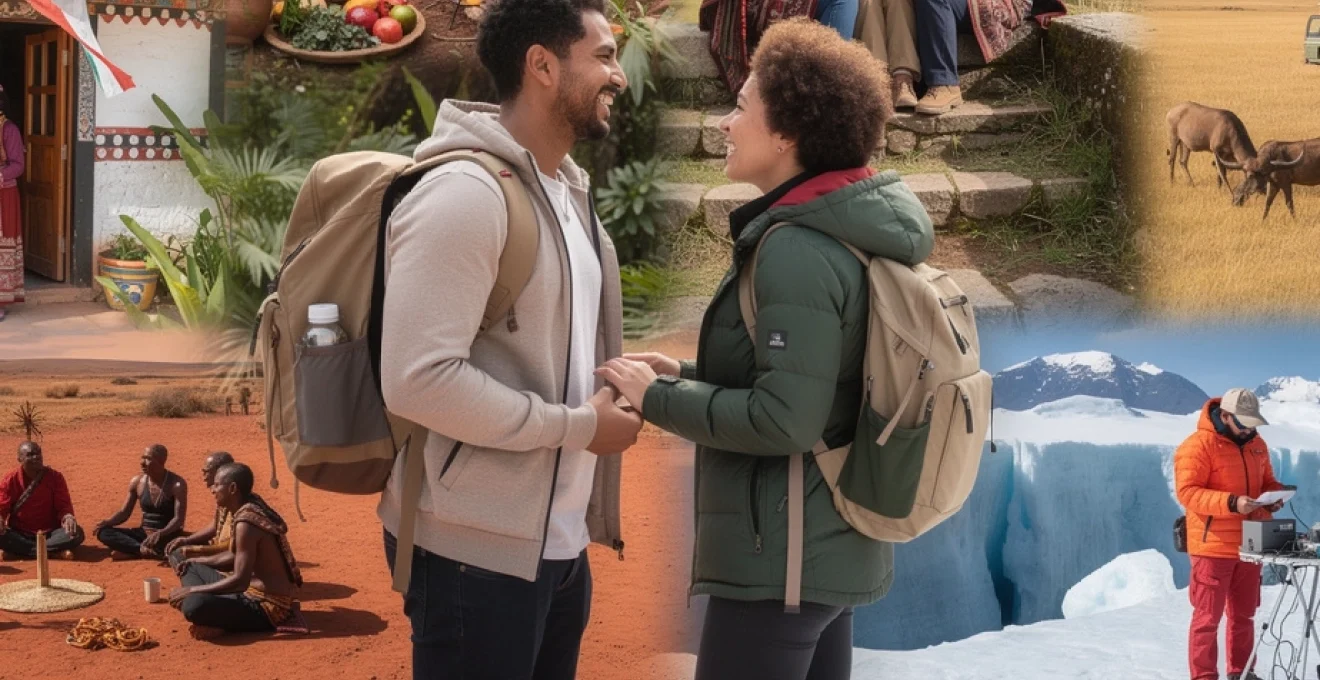
The travel industry has witnessed a profound transformation in recent years, with discerning travellers increasingly seeking experiences that transcend conventional tourism. What once constituted luxury travel—pristine hotels, Michelin-starred restaurants, and five-star service—now represents merely the baseline expectation for sophisticated globetrotters. Today’s exceptional travel experiences are characterised by their ability to forge genuine connections between visitors and destinations, creating transformative encounters that resonate long after the journey concludes.
The defining elements of truly exceptional global travel experiences extend far beyond traditional markers of quality. These extraordinary journeys combine authentic cultural immersion, exclusive access to pristine natural environments, innovative adventure tourism methodologies, personalised ultra-luxury hospitality, and meaningful contributions to conservation efforts. Each component works synergistically to create travel experiences that are not merely memorable, but genuinely life-altering.
Understanding what constitutes exceptional travel in the modern era requires recognising that today’s sophisticated travellers seek more than passive consumption of destinations. They desire active participation in local cultures, meaningful engagement with conservation efforts, and access to experiences that cannot be replicated elsewhere. This shift reflects a broader evolution in traveller values, where impact and authenticity have become as important as comfort and convenience.
Authentic cultural immersion beyond tourist veneer
Exceptional travel experiences distinguish themselves through their ability to pierce the carefully constructed tourist veneer that shields many destinations’ authentic cultural fabric. These immersive encounters require careful cultivation of relationships with local communities, often taking years to develop the trust necessary for genuine cultural exchange. The most transformative experiences occur when travellers are invited not as observers, but as temporary participants in local life.
The depth of cultural immersion achievable through these programmes fundamentally alters the travel experience. Rather than viewing culture through the sanitised lens of tourist performances, participants engage with living traditions in their natural context. This approach recognises that authentic culture is not a commodity to be packaged and sold, but a dynamic force that must be experienced within its proper social and geographical framework.
Genuine cultural immersion transforms tourists from passive observers into active participants, creating bridges of understanding that extend far beyond the duration of travel.
Homestays in remote bhutanese villages and their cultural protocols
Bhutan’s commitment to Gross National Happiness over gross domestic product creates unique opportunities for cultural immersion that remain largely inaccessible through conventional tourism channels. Homestays in remote Bhutanese villages offer unprecedented insights into Buddhist philosophy as a lived practice, rather than an abstract concept. Participants must navigate complex cultural protocols that govern everything from meal preparation to spiritual observances, creating authentic learning experiences that cannot be replicated in tourist accommodations.
These village homestays typically involve participation in daily agricultural activities, traditional craft production, and religious ceremonies. Guests contribute to household responsibilities whilst learning about sustainable farming practices that have remained unchanged for centuries. The experience challenges Western notions of comfort and convenience, replacing them with deeper understandings of community interdependence and environmental stewardship.
Traditional cooking classes with indigenous communities in papua new guinea
Papua New Guinea’s extraordinary cultural diversity—with over 800 distinct languages spoken across the nation—provides unparalleled opportunities for culinary immersion programmes. These experiences extend far beyond recipe instruction, encompassing traditional foraging techniques, indigenous ingredient identification, and ceremonial food preparation methods that carry deep spiritual significance. Participants learn to prepare meals using traditional cooking methods that have remained unchanged for thousands of years.
The most exceptional programmes involve multi-day expeditions into remote highland communities, where participants contribute to garden maintenance, participate in traditional hunting and gathering activities, and learn about the complex social protocols that govern food sharing within tribal structures. These experiences provide profound insights into sustainable resource management and the intricate relationships between cultural identity and culinary traditions.
Sacred ceremony participation rights in aboriginal australian territories
Access to sacred Aboriginal ceremonies represents one of the most exclusive and culturally significant experiences available to international travellers. These opportunities require extensive vetting processes and deep respect for cultural sensitivities, as many ceremonies have remained closed to outsiders for tens of thousands of years. Participation rights are granted only to individuals who demonstrate genuine commitment to cultural learning and long-term relationship building with Aboriginal communities.
The ceremonial experiences encompass dream
time stories, songlines, and ancestral law, often conveyed through dance, music, and symbolic body painting. Rather than being passive spectators, visitors may be invited to assist with preparations, learn appropriate greetings in local languages, or participate in specific elements of the ritual that elders deem culturally safe to share. Every action is guided by custodians who define what can be photographed, what must remain unrecorded, and which narratives should never leave the community.
For travellers, these sacred ceremony participation rights highlight a core truth of exceptional travel: access is a privilege, not an entitlement. Programmes that facilitate such experiences typically operate on Indigenous terms, with strict caps on group sizes, robust cultural briefings, and clear expectations around behaviour and reciprocity. Fees are routed through community-controlled bodies, ensuring that cultural heritage remains in local hands and that tourism revenue supports language revitalisation, land management, and youth education initiatives.
Language exchange programs with quechua speakers in peruvian highlands
Language exchange programmes with Quechua-speaking communities in the Peruvian highlands represent another powerful form of authentic cultural immersion. Rather than relying solely on Spanish- or English-speaking guides, these initiatives place Quechua at the centre of the experience. Travellers engage in structured language sessions, informal conversations during shared meals, and field-based practice in markets, weaving cooperatives, and agricultural terraces that date back to Inca times.
What makes these programmes exceptional is their emphasis on reciprocity and co-learning. Participants are not simply “students”; they also share their own languages or skills in carefully facilitated exchanges that respect local priorities. In some villages, for example, visitors might assist with basic digital literacy, conversational English for guides, or storytelling workshops for children, while local hosts teach Quechua expressions, oral histories, and traditional songs. This mutual exchange reframes travel as a collaborative educational journey rather than a one-way extraction of cultural value.
Furthermore, many Quechua language initiatives are directly linked to broader cultural preservation efforts. Fees help fund community radio programmes broadcast in Quechua, finance the documentation of elders’ stories, or support women’s weaving collectives that encode ancestral knowledge into textile patterns. For travellers seeking truly exceptional global travel experiences, participating in such a programme offers both deep cultural understanding and the chance to contribute to the longevity of an endangered linguistic heritage.
Exclusive access to pristine natural environments
Beyond cultural immersion, truly exceptional travel is often defined by access to natural environments that remain largely untouched by mass tourism. These experiences go far beyond standard wildlife safaris or scenic hikes; they involve carefully managed entry to fragile ecosystems underpinned by robust conservation science. The most meaningful encounters are designed in partnership with local communities, scientists, and conservation organisations to ensure that access supports ecological integrity rather than undermining it.
In an era when biodiversity loss and climate change are reshaping landscapes at unprecedented speed, exclusive access to pristine environments carries both privilege and responsibility. Exceptional programmes recognise this duality, embedding education, ethical guidelines, and measurable conservation outcomes into every itinerary. Rather than ticking off iconic sites, travellers become temporary stewards of the places they visit, learning first-hand how their presence can either harm or help these ecosystems.
Private conservancy partnerships in kenya’s maasai mara ecosystem
Kenya’s Maasai Mara ecosystem offers a compelling example of how private conservancy partnerships can elevate traditional safari experiences into exceptional conservation-led journeys. Unlike crowded national reserve areas, community-owned conservancies restrict visitor numbers, limit vehicle density, and manage grazing to balance wildlife needs with pastoralist livelihoods. Guests staying in low-impact camps within these conservancies often enjoy exclusive access to large tracts of land, resulting in more intimate wildlife encounters and fewer disturbances to animal behaviour.
What differentiates these conservancy stays is their direct economic partnership with Maasai landowners. Lease fees and conservation levies are paid to local families or community trusts, creating tangible incentives to protect wildlife corridors rather than converting land to agriculture or fencing it for private use. Travellers may have opportunities to meet conservancy managers, attend ranger briefings, or accompany anti-poaching patrols, gaining insight into the complex trade-offs required to keep this ecosystem intact.
For visitors seeking truly exceptional global travel experiences, the value lies not only in exclusive game drives or night safaris, but in understanding the governance models that make such access sustainable. By choosing operators embedded in conservancy structures, travellers effectively vote with their wallets for a future where wildlife tourism funds land conservation and community development in equal measure.
Research station collaborations in antarctica’s mcmurdo dry valleys
Access to Antarctica’s McMurdo Dry Valleys—one of the coldest, driest, and most scientifically significant regions on Earth—is tightly controlled through international agreements and rigorous environmental protocols. Only a handful of research-focused expeditions, often operating under government science programmes or highly specialised polar operators, incorporate collaborative visits to research stations in or near this area. When carefully managed, these collaborations can constitute some of the most exceptional polar travel experiences available.
Travellers may participate in structured field days with glaciologists, microbiologists, or climate scientists, assisting with non-sensitive tasks such as snow sampling, instrument checks, or data logging under close supervision. These activities transform passive sightseeing into active engagement with frontline research on planetary change. Instead of simply admiring ice formations, visitors learn how these landscapes act as analogues for Martian environments or early Earth conditions, deepening their appreciation of both science and place.
However, such access is never casual. Strict visitor caps, biosecurity measures, and “leave no trace” protocols ensure that tourism does not contaminate fragile microbial ecosystems or disrupt critical research. Exceptional polar operators invest heavily in pre-departure education, often requiring guests to attend webinars or training sessions on Antarctic Treaty regulations, wildlife guidelines, and climate impacts. The result is an experience that feels less like tourism and more like a temporary apprenticeship in planetary stewardship.
Deep sea exploration permits for palau’s jellyfish lake
Palau’s Jellyfish Lake, once a symbol of surreal marine beauty, has become a case study in how fragile marine ecosystems can be both opened to and protected from tourism. After periods of closure to allow the jellyfish population to recover from environmental stress, access is now governed by strict permit systems and carrying capacity limits. Exceptional travel experiences here are defined not by casual snorkelling, but by highly curated, small-group expeditions that integrate marine biology education, conservation funding, and deep respect for the site’s vulnerability.
Advanced programmes may combine Jellyfish Lake permits with deeper exploration of Palau’s marine protected areas, including guided dives on outer reefs, visits to coral restoration projects, and briefings with local conservation NGOs. Travellers learn how tourism revenue funds surveillance against illegal fishing, supports community-based marine management, and finances research on climate resilience in coral ecosystems. This context transforms a visually striking experience into a nuanced lesson on ocean governance.
As climate change continues to impact jellyfish populations and reef health, the very possibility of visiting such sites becomes more precarious. For conscientious travellers, securing access through operators who adhere to best-practice guidelines—such as no-touch policies, reef-safe sunscreen requirements, and boat emission standards—ensures that their pursuit of exceptional experiences does not accelerate the degradation of the environments they came to admire.
Restricted wildlife corridors in madagascar’s andasibe-mantadia national park
Madagascar’s Andasibe-Mantadia National Park and its surrounding corridors harbour some of the planet’s most unique biodiversity, including the iconic indri lemur. Many of the critical forest fragments that sustain these species are located on community-managed or privately owned lands where access is tightly controlled to protect breeding sites and reduce stress on vulnerable populations. Exceptional travel experiences here involve carefully negotiated entry into restricted wildlife corridors, always under the guidance of accredited local conservationists.
Small groups may trek along unmarked trails used primarily by researchers and rangers, observing lemur families, rare chameleons, and endemic bird species in relatively undisturbed habitats. Unlike standard tourist circuits, these routes often incorporate interpretive stops that explain reforestation efforts, land tenure challenges, and the role of ecotourism revenues in funding park guards’ salaries and community projects. Travellers gain a holistic understanding of how fragmented landscapes can be reconnected through both ecological and economic corridors.
To maintain the integrity of these sensitive areas, access is often conditional on travellers meeting specific criteria: willingness to abide by strict noise and distance regulations, acceptance of basic field conditions, and commitment to support conservation through higher permit fees or donations. For those prepared to engage at this level, the reward is a profoundly intimate encounter with Madagascar’s biodiversity, framed within a clear narrative of conservation and community resilience.
Transformative adventure tourism methodologies
While adventure tourism has long promised excitement and adrenaline, truly exceptional global travel experiences move beyond mere thrills. They harness adventure as a structured methodology for personal growth, cross-cultural learning, and environmental awareness. In this context, activities such as trekking, kayaking, or mountaineering become vehicles for transformation rather than ends in themselves, much like a challenging course that teaches resilience instead of simply testing endurance.
Leading operators in this space design itineraries using principles borrowed from experiential education and psychology. Programmes are scaffolded so that each challenge—be it a multi-day hike at altitude or a technical canyoning descent—is preceded by thorough briefings and followed by guided reflection. Travellers are encouraged to interrogate their responses to risk, discomfort, and uncertainty, asking not only “Can I do this?” but also “What does this reveal about how I approach my life at home?” In this way, adventure becomes a mirror as much as a landscape.
The most innovative adventure methodologies also embed cultural and environmental context into every activity. A glacier trek, for instance, might be paired with sessions on local water security, while a desert crossing could include dialogues with nomadic communities about climate adaptation. By linking physical challenge to place-based learning, these programmes ensure that travellers come away not just fitter or braver, but more informed and empathetic global citizens.
Personalised service excellence in ultra-luxury hospitality
Exceptional travel is not defined solely by rugged expeditions or remote ecosystems; it also depends on how travellers are cared for throughout their journey. In the ultra-luxury segment, however, the definition of service excellence has evolved dramatically. Where once it meant rigid adherence to universal standards—certain thread counts, prescribed greeting protocols, or uniform restaurant formats—it now centres on hyper-personalisation, cultural nuance, and genuine human connection.
Modern travellers expect their preferences to be anticipated, but not assumed. The most sophisticated properties and travel designers therefore invest heavily in pre-arrival profiling and discreet data collection, building detailed yet respectful portraits of each guest. Rather than delivering generic “surprises and delights,” they curate experiences that respond to individual passions: a last-minute arrangement for a private gallery visit, a customised wellness programme that accounts for jet lag and climate, or a late-night astronomy session for guests fascinated by the night sky.
Crucially, this level of personalisation must never feel intrusive or performative. Leading brands train their teams to exercise judgement as well as efficiency, empowering staff to adapt global service standards to local cultural contexts. A butler in Kyoto, for instance, will express attentiveness through subtle presence and anticipation, while a safari host in Botswana may prioritise warm conversation and shared storytelling around the fire. In both cases, what defines excellence is not opulence for its own sake, but a profound sense that the service exists to deepen the guest’s connection with the destination and with themselves.
Sustainable tourism impact measurement and conservation integration
As travellers grow more conscious of their environmental footprint, exceptional global travel experiences are increasingly judged by their measurable contribution to sustainability. It is no longer sufficient for operators to claim “eco-friendly” status through isolated initiatives such as linen reuse or plastic reduction. Leading brands now integrate rigorous impact measurement frameworks that track carbon emissions, biodiversity outcomes, and socio-economic benefits at the destination level.
Effective programmes begin with clear baselines and transparent metrics. Operators may calculate per-guest carbon footprints, publish annual sustainability reports, or align their impact goals with recognised frameworks such as the Global Sustainable Tourism Council (GSTC) criteria or the UN Sustainable Development Goals. Importantly, they communicate these findings in accessible language, enabling travellers to understand how their choices translate into real-world outcomes—whether reforested hectares, funded ranger positions, or scholarships for local students.
Conservation integration goes a step further by embedding environmental and cultural protection into the core design of itineraries. Rather than adding a token tree-planting activity, exceptional travel companies co-create long-term projects with local stakeholders: supporting marine protected areas, financing community-led anti-poaching units, or underwriting the operational costs of archaeological sites. Travellers are invited to witness these projects first-hand, not as voyeuristic “impact tourists,” but as informed partners whose fees and advocacy help sustain ongoing work.
Ultimately, what distinguishes truly exceptional travel in this domain is a commitment to accountability. When travellers ask, “How is my journey making a difference?” the best operators can respond with specific, verifiable answers rather than vague assurances. This transparency not only builds trust; it also transforms travel from a purely consumptive act into a form of engaged global citizenship—one in which discovery, luxury, and responsibility are inextricably linked.