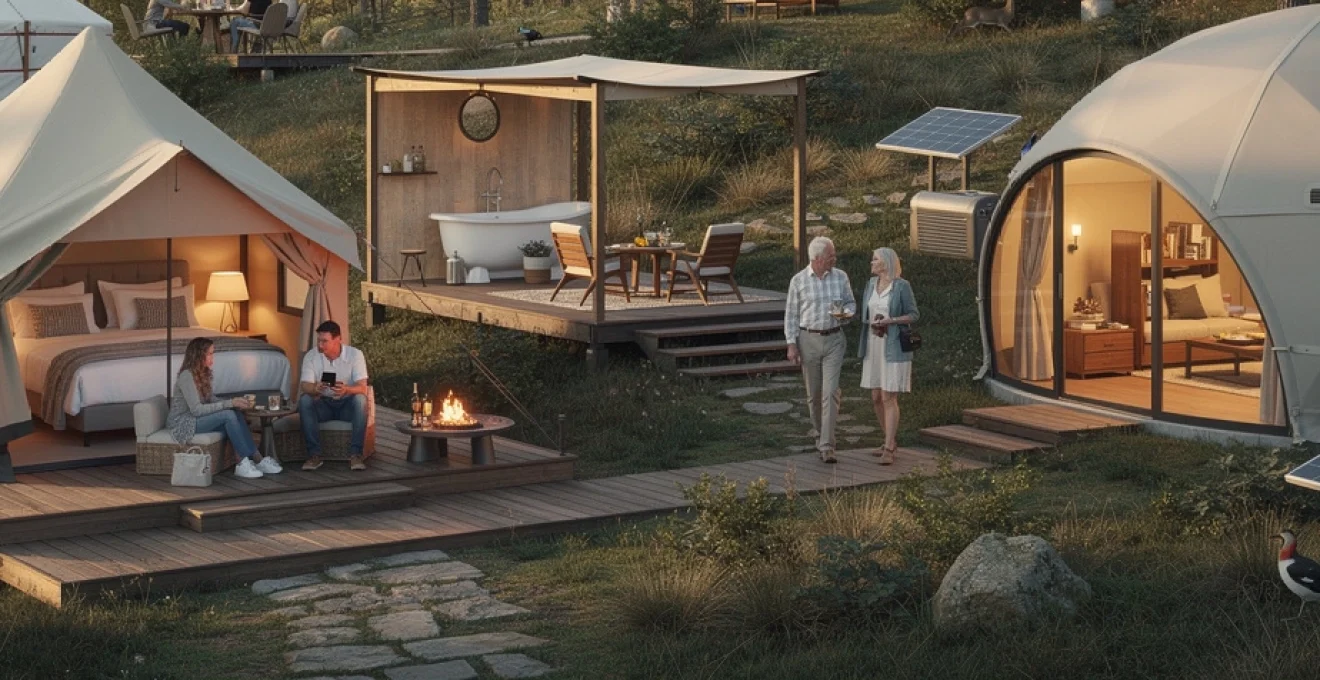
The hospitality industry has witnessed a remarkable transformation in recent years, with luxury glamping emerging as one of the most sought-after travel experiences globally. This sophisticated evolution of traditional camping combines the raw beauty of nature with five-star amenities, creating an entirely new category of accommodation that appeals to discerning travellers who refuse to compromise on comfort. From the African safari camps of the early 20th century to today’s technologically advanced eco-pods, luxury glamping represents a fusion of adventure and indulgence that has captured the imagination of modern explorers.
The phenomenon extends far beyond simple tent accommodations, encompassing architectural marvels like geodesic domes, suspended treehouses, and climate-controlled pavilions that offer unparalleled access to pristine wilderness areas. This evolution reflects changing consumer preferences towards experiential travel, environmental consciousness, and the growing desire to disconnect from digital saturation whilst maintaining essential comforts. The luxury glamping market has experienced explosive growth, with industry reports indicating a compound annual growth rate exceeding 12% globally, demonstrating its transition from niche offering to mainstream hospitality sector.
Defining luxury glamping: safari lodges, Eco-Pods, and premium canvas accommodations
Luxury glamping transcends the basic concept of “glamorous camping” to represent a sophisticated hospitality offering that rivals traditional five-star accommodations. The distinguishing factor lies in the seamless integration of premium amenities within structures that maintain an intimate connection with natural environments. Unlike conventional hotels, these accommodations are purposefully designed to blur the boundaries between indoor and outdoor living, creating immersive experiences that celebrate rather than shield guests from their surroundings.
The architectural diversity within luxury glamping establishments reflects regional aesthetics and environmental considerations. Contemporary luxury glamping structures incorporate cutting-edge materials and technologies whilst respecting local building traditions and ecological constraints. These accommodations often feature bespoke furniture, artisanal textiles, and curated art collections that rival boutique hotels, yet they’re situated in locations where traditional construction would be environmentally inappropriate or logistically impossible.
Canvas bell tents with Four-Poster beds and En-Suite facilities
Premium canvas accommodations represent the quintessential luxury glamping experience, combining traditional tent aesthetics with sophisticated interior design. These structures utilise heavy-duty marine-grade canvas supported by engineered steel frameworks, creating spacious interiors that accommodate full-sized furniture and modern amenities. The canvas walls provide natural temperature regulation whilst maintaining the authentic camping ambience that distinguishes glamping from conventional accommodations.
Interior appointments in luxury canvas tents rival those found in premium boutique hotels. Four-poster beds crafted from sustainable hardwoods dominate sleeping areas, complemented by Egyptian cotton linens and down-filled duvets. En-suite facilities incorporate eco-friendly technologies such as composting toilets and greywater recycling systems, ensuring environmental responsibility without compromising guest comfort. Private bathrooms feature rainfall showers, heated floors, and luxury amenities that create spa-like experiences within wilderness settings.
Geodesic domes with climate control and Floor-to-Ceiling windows
Geodesic dome accommodations represent the intersection of architectural innovation and environmental sustainability within luxury glamping. These mathematically precise structures distribute structural loads efficiently, enabling construction in challenging terrains whilst minimising environmental impact. The dome configuration maximises interior volume relative to surface area, creating surprisingly spacious accommodations within relatively compact footprints.
Advanced climate control systems in luxury dome accommodations utilise smart technology to maintain optimal comfort levels whilst minimising energy consumption. Floor-to-ceiling transparent panels provide panoramic views of surrounding landscapes, creating the sensation of sleeping beneath open skies whilst protecting guests from weather extremes. These windows often incorporate electrochromic glass technology, allowing occupants to adjust transparency levels for privacy or light control without compromising structural integrity.
Safari-style pavilions with private decks and butler service
Safari-inspired pavilions represent the pinnacle of luxury glamping, drawing inspiration from African safari camps that catered to aristocratic adventurers of the colonial era. These elevated structures feature expansive canvas walls that can be opened completely to surrounding environments, creating seamless indoor-outdoor living spaces. The pavilion design incorporates traditional safari aesthet
aesthetics with contemporary comfort, often featuring canvas roofs suspended over hardwood platforms, ceiling fans, and open-air lounges furnished with handcrafted pieces.
Luxury safari pavilions typically include expansive private decks equipped with plunge pools, outdoor showers, and dedicated dining areas for personalised meals under the stars. Many high-end safari-style glamping resorts offer dedicated butler service, curated mini-bars, and in-tent spa treatments, effectively transforming each pavilion into a self-contained sanctuary. Guests can return from a game drive or guided hike to find a drawn bath, a chilled bottle of wine, and a lantern-lit terrace prepared just for them, illustrating how far luxury glamping has evolved from its camping roots.
Treehouse pods with suspended walkways and forest canopy access
Treehouse pods elevate luxury glamping experiences—often literally—by positioning guests within the forest canopy rather than at ground level. These architecturally engineered structures are anchored to or wrapped around mature trees using non-invasive techniques that preserve root systems and bark integrity. Suspended walkways and rope bridges connect pods to communal spaces, creating an immersive arboreal network that allows guests to move through the treetops as naturally as they might walk along a garden path.
Inside, premium treehouse pods feature insulated walls, underfloor heating, and soundproofing that ensures tranquillity despite exposure to the elements. Floor-to-ceiling glazing and wraparound balconies provide uninterrupted views of forest ecosystems, enabling birdwatching and wildlife observation from the comfort of a designer armchair. Many contemporary treehouse glamping sites integrate rooftop decks, outdoor hot tubs, and telescopes for stargazing, transforming a childhood fantasy into a sophisticated, adults-only nature retreat.
Yurt accommodations with handcrafted furnishings and heated floors
Modern luxury yurts reinterpret centuries-old nomadic dwellings with a strong emphasis on comfort and aesthetics. While they retain their distinctive circular footprint and lattice wall structure, high-end yurts incorporate advanced insulation materials, double-glazed skylights, and integrated heating systems. The result is an all-season glamping accommodation that remains comfortable in alpine winters and temperate during hot summers, without losing its authentic character.
Interior design within luxury yurts often highlights regional craftsmanship, featuring handwoven rugs, carved wooden cabinetry, and bespoke lighting fixtures that echo local cultural motifs. Heated floors and integrated wood-burning stoves create a cosy, hygge-inspired ambience, especially appealing to guests seeking winter glamping experiences. En-suite bathrooms may be contained within the yurt or in adjoining pods connected by covered walkways, ensuring that even in remote wilderness locations, guests enjoy hot showers, premium toiletries, and the privacy associated with five-star hospitality.
Premium glamping destinations: clayoquot wilderness resort, under canvas, and longitude 131°
Whilst luxury glamping can be found in many regions, a handful of flagship destinations have set global benchmarks for service standards, architectural innovation, and experiential design. These properties demonstrate how luxury glamping can compete directly with top-tier boutique hotels and resorts, whilst offering something traditional hospitality cannot: direct immersion in some of the world’s most spectacular natural landscapes. For travellers considering their first luxury glamping holiday, these destinations serve as compelling case studies.
Clayoquot wilderness resort’s luxury tented camp experience in british columbia
Situated on Vancouver Island’s remote west coast, Clayoquot Wilderness Resort (now Clayoquot Wilderness Lodge) epitomises ultra-luxury tented glamping in a temperate rainforest setting. Accessible primarily by seaplane or boat, the property blends safari-style canvas tents with lodge facilities, offering guests an all-inclusive experience that rivals the finest wilderness resorts. Each tented suite is elevated on wooden platforms, with king-sized beds, cast-iron stoves, and heated floors ensuring comfort despite the region’s rugged climate.
The resort’s luxury glamping experience is defined as much by its guided activities as by its accommodation. Guests can embark on bear-watching excursions, kayaking trips through old-growth forests, and heli-hiking adventures across glacial landscapes, returning each evening to multi-course dinners featuring locally sourced seafood and produce. Sustainability underpins operations: Clayoquot employs strict wildlife interaction protocols, invests in conservation initiatives, and utilises low-impact infrastructure to protect the fragile coastal ecosystem, demonstrating how high-end glamping and environmental stewardship can coexist.
Under canvas yellowstone’s safari-inspired accommodations near national parks
Under Canvas has become synonymous with accessible luxury glamping in North America, with its Yellowstone property often cited as a benchmark for safari-inspired accommodations near major national parks. Located just minutes from Yellowstone National Park’s west entrance, the camp features spacious canvas tents outfitted with king beds, wood-burning stoves, and optional en-suite bathrooms. Unlike traditional hotels within park boundaries, these tents allow guests to fall asleep to the sounds of the forest and wake to wide-open skies, enhancing the sense of proximity to nature.
The brand’s model demonstrates how luxury glamping can scale without sacrificing authenticity. Guests can choose from several tent categories, ranging from romantic suites with private decks to family tents with adjacent children’s “kid tents.” Daily activities might include guided hikes, wildlife tours, or evening s’mores by the communal firepit, striking a balance between curated experiences and unstructured leisure time. Seasonal operating periods, typically from late spring to early autumn, allow Under Canvas to align its presence with favourable weather conditions and visitor demand, optimising occupancy whilst minimising environmental impact.
Longitude 131° uluru’s desert pavilions with ayers rock views
In Australia’s Red Centre, Longitude 131° has redefined what desert luxury glamping can look like. The property’s elevated tented pavilions are strategically positioned to provide uninterrupted views of Uluru (Ayers Rock), one of the country’s most iconic natural landmarks. Each pavilion combines canvas roofing with solid structural elements, delivering climate-controlled comfort in a region known for temperature extremes, whilst still maintaining the aesthetic of a tented camp.
Inside, guests encounter a level of refinement comparable to luxury city hotels: custom artwork celebrating Indigenous culture, designer furnishings, and fully stocked bars come standard. Inclusive itineraries feature guided excursions to Uluru–Kata Tjuta National Park, cultural experiences with Anangu Traditional Owners, and fine dining menus that reinterpret native Australian ingredients. By fusing luxury glamping architecture with deep cultural storytelling, Longitude 131° illustrates how high-end outdoor accommodation can facilitate meaningful engagement with place, rather than simply providing a scenic backdrop.
Whitepod Eco-Luxury hotel’s geodesic structures in swiss alps
Whitepod Eco-Luxury Hotel in the Swiss Alps showcases how geodesic domes can deliver a premium glamping experience in extreme mountain environments. Each pod is an insulated dome anchored to a wooden platform, positioned on the mountainside to maximise privacy and frame expansive valley views. In winter, guests ski directly from their pod doors, while in summer the same slopes transform into hiking and mountain-biking trails, underscoring the destination’s year-round appeal.
The interiors of Whitepod’s domes are deliberately minimalist yet luxurious, with pellet stoves, organic bedding, and curated alpine decor creating a refined cabin-like atmosphere. Central lodge facilities offer spa treatments, gourmet dining, and lounge areas, ensuring that even in off-grid conditions, guests enjoy seamless hospitality. Whitepod has become a reference point for eco-conscious luxury glamping, operating with reduced energy consumption, wildlife-friendly lighting, and strict waste-management practices that align with Switzerland’s broader sustainability ethos.
Experiential tourism integration: wildlife safaris, stargazing, and adventure activities
One of the principal reasons luxury glamping experiences are so popular is their alignment with experiential tourism—the growing preference for transformative, activity-rich stays over purely passive vacations. Instead of limiting guests to a room with a view, premium glamping destinations curate entire itineraries built around location-specific experiences. This might include sunrise wildlife safaris, night-time stargazing sessions guided by astronomers, or adrenaline-fuelled adventures like white-water rafting and zip-lining.
Because luxury glamping sites are typically positioned in or near pristine wilderness, they can offer nature-based activities that standard city hotels simply cannot match. Guests might track big cats in African reserves, observe bioluminescent plankton from coastal eco-pods, or join rangers for conservation-focused excursions. At the same time, softer experiences—such as yoga platforms overlooking valleys, forest-bathing sessions, or guided photography walks—cater to travellers seeking wellness and introspection rather than high-intensity thrills. In effect, the accommodation becomes a basecamp for personalised adventures tailored to different comfort levels.
Importantly, luxury glamping operators increasingly collaborate with local guides, Indigenous communities, and subject-matter experts to deliver these experiences. This not only supports local economies but also adds depth and authenticity; hearing a story about the night sky from an astronomer, for instance, is very different from simply looking up at the stars alone. As experiential tourism continues to grow—industry analyses predict that the global experiential travel market will surpass $1 trillion within the decade—glamping’s built-in proximity to nature and flexible infrastructure positions it as a natural beneficiary of this demand.
Sustainable luxury infrastructure: off-grid power systems and eco-conscious construction
At first glance, “luxury” and “sustainability” might appear contradictory. How can a five-star wilderness retreat minimise its footprint whilst offering heated floors, hot tubs, and gourmet cuisine? The answer lies in thoughtful infrastructure design. Many modern luxury glamping sites are conceived from the ground up as off-grid or low-impact operations, leveraging renewable energy, advanced water systems, and eco-conscious construction to reconcile comfort with conservation.
This shift reflects a broader trend in hospitality: guests—particularly younger, affluent travellers—are increasingly likely to choose properties that demonstrate genuine environmental responsibility. Surveys from leading travel platforms indicate that more than 70% of global travellers want sustainable travel options, yet are unwilling to sacrifice basic comfort. Luxury glamping responds to this tension by using technology and design to reduce hidden impacts, ensuring that the visible opulence does not come at the expense of the surrounding ecosystem.
Solar panel arrays and battery storage solutions for remote locations
Because many luxury glamping resorts are located far from urban centres, connecting to conventional power grids can be both impractical and environmentally costly. Solar panel arrays, often mounted discreetly on service buildings or integrated into canopy structures, provide a clean, silent alternative. These arrays feed into battery storage systems that ensure 24/7 energy availability, even during overcast periods or peak usage times. Smart inverters and energy-management systems prioritise essential loads—such as lighting, heating, and refrigeration—whilst optimising overall efficiency.
For guests, the transition to renewable power is largely invisible; they still enjoy climate control, charging points, and ambient lighting, but with significantly reduced carbon emissions. Some high-end glamping operators go a step further by communicating real-time energy usage data via in-room tablets or information panels. This transparency not only reinforces the resort’s sustainability credentials but also encourages more mindful consumption, turning each stay into a subtle educational experience about off-grid living.
Greywater recycling systems and composting toilet technologies
Water management is another critical component of sustainable luxury glamping infrastructure, particularly in arid or water-stressed regions. Greywater recycling systems capture lightly used water from showers and sinks, treat it through biofiltration or membrane processes, and reuse it for irrigation or toilet flushing. This closed-loop approach can reduce freshwater consumption dramatically, allowing lush landscaping and comfortable bathing facilities without depleting local resources.
Composting toilets, once associated primarily with basic eco-cabins, have also been refined for high-end applications. Modern units are odourless, visually streamlined, and often integrated within stylish en-suite bathrooms that guests might not immediately recognise as off-grid. By converting waste into safe compost over time, these systems eliminate the need for extensive sewer infrastructure or frequent pump-outs in remote locations. When combined, advanced greywater and composting technologies help luxury glamping resorts maintain five-star bathroom standards while adhering to strict sustainability goals.
Natural building materials: reclaimed timber and local stone integration
Material choices play a major role in determining both the environmental impact and the aesthetic character of luxury glamping accommodations. Rather than relying on mass-produced, high-embodied-carbon materials, many operators prioritise locally sourced timber, stone, and earth-based products. Reclaimed wood from barns, piers, or decommissioned structures can be repurposed into decking, furniture, and feature walls, adding visual warmth and narrative depth—each knot and grain tells a story, much like a vintage piece of luggage in a heritage hotel.
Local stone, meanwhile, is commonly used for foundations, pathways, and fireplace surrounds, anchoring lightweight structures in the landscape both physically and visually. This approach reduces transportation emissions and ensures that each glamping site feels native to its surroundings, rather than transplanted. Natural insulation materials such as sheep’s wool, cellulose, or cork can further enhance thermal performance without relying on petrochemical products. The result is a series of structures that age gracefully, blending more deeply with the environment over time rather than standing in stark contrast to it.
Wildlife corridor preservation and minimal environmental impact design
Beyond materials and utilities, the spatial planning of luxury glamping developments significantly influences their ecological footprint. Thoughtful masterplans preserve wildlife corridors—natural pathways used by animals to move between feeding, breeding, and sheltering areas—by clustering accommodation units and leaving large tracts of land undisturbed. Elevated boardwalks and lightweight pathways reduce soil compaction and vegetation damage, enabling guests to explore without fragmenting habitats.
Minimal-impact design often follows a “touch the earth lightly” philosophy: structures are built on reversible foundations, such as screw piles or floating platforms, which can be removed with minimal long-term scarring. Lighting design prioritises downward-facing, amber-hued fixtures to reduce light pollution and protect nocturnal species. For travellers who value ethical, sustainable luxury, knowing that their stay does not displace wildlife or alter migration patterns can be as important as thread count or wine lists—perhaps even more so.
Market demographics: affluent millennials, experience-seeking baby boomers, and corporate retreat demand
The rapid rise of luxury glamping is closely linked to shifting travel demographics and preferences. Affluent millennials, who often prioritise experiences over possessions, are drawn to the idea of “sleeping under the stars” without sacrificing design, connectivity, or wellness facilities. For this audience, luxury glamping delivers the Instagram-ready visuals of remote landscapes combined with curated activities, organic cuisine, and eco-credentials that align with their values. Flexible booking platforms and digital-first marketing make it easy for them to discover and compare properties worldwide.
Baby boomers represent another significant segment, particularly those who enjoyed traditional camping in their youth but now seek greater comfort and convenience. For these travellers, luxury glamping offers a nostalgic return to nature, minus the physical strain of pitching tents, sleeping on thin mats, or navigating communal washblocks at night. Accessibility features such as level pathways, high-quality mattresses, and in-tent heating make extended stays in wilderness environments viable well into retirement years, supporting multi-generational trips where grandparents, parents, and children can share a common base.
Corporate demand adds a further layer to the market. Companies increasingly look for off-site locations that foster creativity, collaboration, and digital detox during retreats and incentive trips. Luxury glamping venues—with their mix of private suites and communal gathering spaces—are well-suited to small to medium-sized groups. Team-building activities can range from conservation projects and guided hikes to cooking classes and wellness workshops, enhancing both employee engagement and brand perception. As hybrid work becomes more common, these retreats function as high-value touchpoints for distributed teams, helping justify premium pricing for exclusive glamping buyouts.
Revenue models and pricing strategies: seasonal rates, package deals, and exclusive access premiums
Behind the canvas walls and panoramic windows, luxury glamping is underpinned by sophisticated revenue strategies designed to balance high operating costs, seasonality, and guest expectations. Most operators adopt dynamic pricing models similar to those used by hotels, adjusting nightly rates based on demand, weather patterns, and local event calendars. Peak periods—such as summer holidays in temperate regions or migration seasons in safari destinations—command premium prices, while shoulder seasons offer more accessible rates to attract value-focused travellers.
Package-based pricing is particularly prevalent in this segment, reflecting the integrated nature of the experience. Rather than selling a room-only rate, many luxury glamping resorts offer all-inclusive or semi-inclusive packages that bundle accommodation with meals, activities, and sometimes transfers. This approach simplifies decision-making for guests—you know exactly what your wilderness escape will cost upfront—and provides operators with more predictable revenue streams. Upsell opportunities, such as private guided tours, spa treatments, or exclusive dining experiences, then add incremental revenue without requiring additional inventory.
Exclusive access premiums also play a crucial role. Because high-end glamping sites often have limited capacity—perhaps 10 to 30 units in total—offering full-site buyouts for weddings, corporate retreats, or special interest groups can justify significantly higher nightly yields. Some properties introduce tiered membership or loyalty programmes, providing repeat guests with priority booking windows, complimentary upgrades, or invitation-only events in exchange for long-term commitment. By combining seasonal rate management, curated packages, and scarcity-driven exclusivity, luxury glamping operators can maintain healthy margins while continuing to invest in the design, sustainability, and experiential elements that make these escapes so compelling.