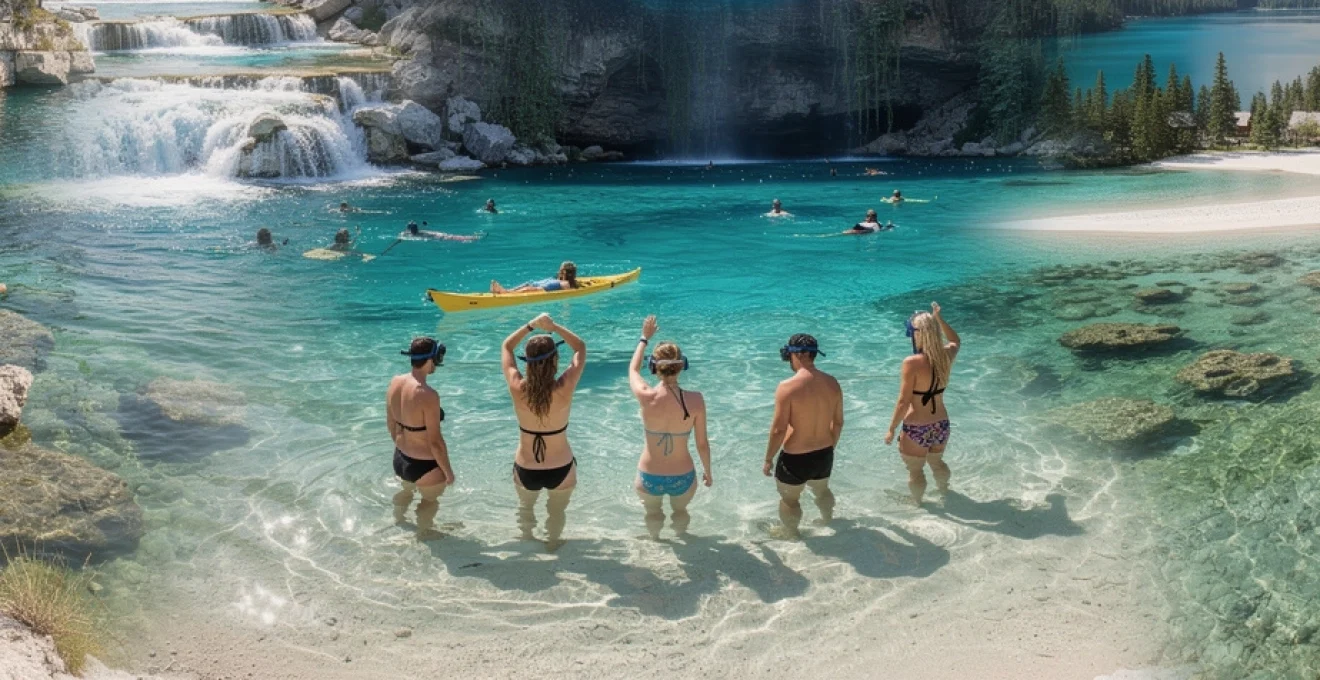
Crystal-clear lagoons represent nature’s most spectacular aquatic masterpieces, offering swimmers the extraordinary experience of floating in waters so transparent they seem suspended in liquid glass. These remarkable natural formations combine perfect geological conditions with pristine environmental factors to create swimming destinations that surpass even the most vivid travel fantasies. From hidden cenotes carved deep within limestone bedrock to volcanic crater lakes nestled among towering peaks, the world’s clearest lagoons provide an almost surreal swimming experience where visibility extends dozens of metres beneath the surface.
The allure of these pristine aquatic environments extends far beyond their visual appeal. Each lagoon tells a unique geological story, shaped by millennia of natural processes that have created the perfect conditions for exceptional water clarity. Whether formed through volcanic activity, glacial erosion, or limestone dissolution, these swimming paradises offer glimpses into Earth’s most fascinating hydrological phenomena while providing unforgettable recreational experiences.
Geological formation and hydrological characteristics of Crystal-Clear lagoons
The exceptional clarity found in the world’s most pristine lagoons results from specific geological and hydrological conditions that work together to create these natural swimming pools. Understanding these underlying factors helps explain why certain locations produce waters of such remarkable transparency whilst others remain clouded by sediments and organic matter.
Geological substrate plays a fundamental role in determining water clarity. Limestone bedrock, volcanic rock formations, and glacially carved basins each contribute unique characteristics to lagoon water quality. The mineral composition of surrounding rock directly influences the pH levels, dissolved mineral content, and overall chemical balance of the water, creating conditions that either promote or inhibit the growth of algae and other organisms that can reduce visibility.
Limestone karst dissolution and cenote development in yucatan peninsula
The Yucatan Peninsula’s famous cenotes exemplify how limestone karst topography creates some of the world’s clearest swimming holes. Over millions of years, slightly acidic rainwater has dissolved the region’s limestone bedrock, creating vast underground cave systems and natural sinkholes filled with crystal-clear freshwater. These cenotes maintain exceptional visibility because the limestone naturally filters groundwater whilst providing calcium carbonate that precipitates out suspended particles.
The halocline effect in many cenotes creates distinct layers where fresh and saltwater meet, producing optical illusions that make swimmers appear to float in mid-air. This phenomenon occurs when freshwater, being less dense than saltwater, forms a distinct layer above the denser saline water below. The different refractive indices of these water layers create stunning visual effects that enhance the already remarkable clarity of these natural pools.
Volcanic crater lake formation at blue lake, mount gambier
Volcanic crater lakes represent another category of exceptionally clear swimming destinations, where explosive volcanic activity has created deep, steep-sided basins that fill with remarkably pure water. Blue Lake in Mount Gambier, Australia, demonstrates how volcanic geology contributes to water clarity through its unique formation process and ongoing mineral interactions.
The lake’s extraordinary blue colour and crystal-clear visibility result from its extreme depth and the way light interacts with the water’s mineral content. Dissolved limestone from the surrounding crater walls creates a natural buffering system that maintains optimal pH levels whilst preventing the growth of algae and other microorganisms that could cloud the water.
Glacial erosion and meltwater accumulation in banff national park
Glacially formed lagoons in locations like Banff National Park showcase how ice age processes create some of the world’s most pristine swimming environments. As glaciers retreat, they leave behind deep basins carved from solid bedrock, which fill with incredibly pure meltwater that has been naturally filtered through layers of ice and rock for centuries.
The glacial flour phenomenon initially creates milky, turquoise-coloured water as finely ground rock particles remain suspended in the meltwater. However, in certain protected lagoons where this sediment has time to settle, the resulting water clarity becomes extraordinary. These alpine swimming holes maintain their pristine condition due to minimal human impact, cold temperatures that inhibit bacterial growth, and continuous replenishment from pure mountain springs.
Coral atoll lagoon dynamics in maldives and cook islands
Coral atoll lagoon dynamics in maldives and cook islands
Coral atoll lagoons, such as those found in the Maldives and the Cook Islands, form when volcanic islands gradually subside and living coral reefs continue to grow upward, creating ring-shaped structures that encircle shallow, protected waters. Over tens of thousands of years, the central volcanic cone erodes and sinks, leaving a calm inner lagoon that is often among the clearest swimming environments on Earth. The continuous biological activity of hard corals and calcareous algae produces fine calcium carbonate sand, which forms brilliant white seabeds that reflect sunlight and enhance the turquoise colour of the lagoon.
Hydrologically, these atoll lagoons are flushed by tides and ocean currents through narrow passes in the reef, creating a natural circulation system that removes suspended sediments and maintains high water quality. Because there are few rivers or large landmasses nearby, there is minimal input of silt or nutrients that could otherwise encourage algal blooms and reduce visibility. Where coastal development and pollution are carefully controlled, swimmers can often see more than 30 metres through the water, making these coral atoll systems some of the world’s premier destinations for both lagoon swimming and snorkelling.
Water quality parameters and visibility factors in pristine swimming lagoons
The astonishing transparency of crystal-clear lagoons depends on a delicate balance of physical, chemical, and biological factors. Parameters such as turbidity, nutrient concentrations, pH, and dissolved mineral content all play critical roles in determining how far you can see underwater. In general, the best swimming lagoons combine low suspended sediment, limited nutrient input, and stable chemical conditions that discourage excessive algal or bacterial growth.
From a swimmer’s perspective, visibility in these lagoons often feels almost unreal: you may be able to see the smallest grains of sand or individual fish scales from several metres away. Yet this clarity is not accidental; it is the outcome of natural filtration processes that can be surprisingly complex. By understanding how precipitation of minerals, biological uptake of nutrients, and groundwater inputs interact, we gain a clearer picture of why some water bodies remain glass-like while others quickly turn murky.
Calcium carbonate precipitation effects in plitvice lakes national park
Plitvice Lakes National Park in Croatia provides a textbook example of how calcium carbonate precipitation can create exceptionally clear turquoise waters. The park’s cascading lakes form in a limestone-rich karst landscape where groundwater is saturated with dissolved calcium and bicarbonate ions. As water flows over mosses, algae, and microbial biofilms, small changes in temperature and carbon dioxide concentration cause calcium carbonate to precipitate out, coating vegetation and rocks with travertine and simultaneously removing fine particles from the water column.
This natural “self-filtering” mechanism acts like a slow-motion water treatment plant, constantly stripping the water of suspended material that would otherwise scatter light and decrease visibility. The resulting low turbidity allows light to penetrate deeply, producing vivid blue-green hues that seem almost artificially enhanced. For swimmers in similar travertine-rich lagoons around the world, the effect is a sensation of gliding through liquid glass, although in strictly protected sites like Plitvice, swimming is prohibited to preserve these fragile formations.
Mineral content analysis of havasu falls travertine pools
The travertine pools at Havasu Falls in Arizona demonstrate how mineral content shapes both the colour and clarity of a lagoon-style environment. Fed by a spring high in dissolved calcium carbonate and magnesium, the water continually deposits fresh layers of travertine that create tiered basins and natural infinity pools. Laboratory analyses have shown that these waters are relatively low in suspended solids and nutrients, which keeps turbidity and algal growth to a minimum.
For swimmers lucky enough to visit similar travertine pools, the high mineral content creates a soft, almost silky feel to the water while the pale, reflective limestone basins enhance the intense turquoise colour. However, the same mineral-rich conditions that make these pools so inviting are also highly sensitive to disturbance. Sunscreens, detergents, and even stirred-up sediment from heavy foot traffic can disrupt the delicate chemical balance, reminding us that maintaining such crystal-clear swimming conditions requires careful visitor management and responsible personal behaviour.
Phytoplankton absence and nutrient limitation in crater lake oregon
Crater Lake in Oregon is often cited as one of the clearest large lakes in the world, with measured visibility exceeding 40 metres in some years. This extraordinary clarity is largely due to the near absence of phytoplankton, microscopic algae that thrive in nutrient-rich waters. Because Crater Lake has no major inflowing rivers and receives most of its water from direct precipitation and snowmelt, levels of nitrogen and phosphorus remain extremely low, limiting algal growth and keeping the water remarkably transparent.
In effect, Crater Lake functions as a naturally oligotrophic system, where nutrient scarcity acts like a “diet” that prevents the water from becoming cloudy with biological growth. For swimmers in similar nutrient-poor crater or alpine lakes, this means exceptional visibility but also much colder temperatures, as clear water absorbs and redistributes solar energy differently than turbid water. These environments illustrate how the same mechanisms that make a lagoon or lake visually stunning can also make it ecologically fragile, particularly when exposed to external nutrient inputs from human activity.
Ph buffering systems in jellyfish lake, palau
Jellyfish Lake in Palau offers a fascinating case study of how pH buffering systems support both unusual biology and clear water conditions. This marine lake, partially isolated from the surrounding lagoon, is home to millions of non-stinging golden jellyfish that migrate daily across the basin. Despite the dense biomass, the water remains surprisingly clear thanks in part to stable pH conditions maintained by the surrounding limestone and limited external nutrient input.
The carbonate buffering system, driven by interactions among dissolved carbon dioxide, bicarbonate, and carbonate ions, helps keep the lake’s pH within a narrow range that is favourable for both the jellyfish and photosynthetic algae living within their tissues. When pH remains stable, metal ions and other potential pollutants are less likely to dissolve into the water, and many microorganisms that thrive in more variable conditions are constrained. For swimmers, this chemical stability translates into consistently clear, comfortable water—though in sensitive sites like Jellyfish Lake, temporary closures to tourism are sometimes necessary to allow the ecosystem to recover.
Sediment filtration mechanisms in bacalar lagoon, mexico
Bacalar Lagoon in Mexico, often called the “Lagoon of Seven Colours,” demonstrates how physical sediment filtration and groundwater dynamics combine to create a crystal-clear swimming environment. Much of the lagoon’s water enters through subterranean springs and cenote-like openings, where it has already been filtered through layers of limestone and sediment. As this groundwater emerges into the lagoon, the low sediment load and gentle flow allow suspended particles to settle rapidly onto the lagoon floor.
Additionally, extensive beds of submerged aquatic vegetation, such as seagrasses and freshwater macrophytes, act as living filters by trapping fine particles and taking up dissolved nutrients. These natural filtration mechanisms help maintain low turbidity and support the lagoon’s iconic gradient of blues, from pale mint in shallow sandy areas to deep navy over cenote depressions. For visitors seeking the best crystal-clear lagoon swimming conditions, early mornings and non-windy days typically offer the calmest surface and the sharpest underwater visibility in Bacalar.
Mediterranean and european crystal lagoons for swimming enthusiasts
Europe and the Mediterranean basin may be better known for their beaches than for lagoons, yet this region hides some of the world’s most inviting crystal-clear swimming enclaves. Protected coves, karstic sinkholes, and fjord-like inlets create sheltered waters that function much like natural lagoons, combining high visibility with relatively warm, calm conditions. Many of these spots benefit from strict environmental regulations and limited riverine input, keeping sediment and nutrient levels low.
In the Mediterranean, island destinations such as Menorca, Sardinia, and the Dalmatian coast offer lagoon-style calas where pine-fringed cliffs shield swimmers from waves and winds. The combination of rocky shorelines, seagrass meadows, and limestone substrates produces water clarity that regularly surprises first-time visitors. Further north, glacially carved lakes in Switzerland, Italy, and Slovenia provide an Alpine twist on the lagoon experience, where you can swim in glassy, emerald basins framed by snow-capped peaks—provided you do not mind refreshingly cool temperatures.
Tropical paradise lagoons: caribbean and pacific island destinations
Across the Caribbean and Pacific, tropical lagoons embody the classic travel fantasy of stepping into warm, impossibly blue water framed by coral reefs and palm trees. These lagoon systems often form behind barrier reefs or within partially enclosed bays, where wave energy is reduced and suspended particles can settle out, leaving water conditions ideal for swimming and snorkelling. Because many of these islands sit far from major landmasses, they escape the heavy sediment and nutrient loads that cloud coastal waters elsewhere.
In the Caribbean, places like Coco Plum Beach in the Bahamas, Grace Bay in Turks and Caicos, and Playa Lagun in Curaçao showcase how shallow sandbars and protective reefs create lagoon-like pools with consistently calm, clear water. In the Pacific, destinations such as Bora Bora, Moorea, and the Rock Islands Southern Lagoon in Palau elevate the experience even further with dramatic volcanic backdrops and intricate coral gardens beneath the surface. When you glide through these crystal-clear lagoons, you are effectively swimming in a living aquarium, where water clarity allows you to observe reef fish, rays, and corals in extraordinary detail.
North american hidden gems: cenotes, hot springs, and alpine lakes
North America offers an impressive collection of crystal-clear swimming lagoons that range from jungle cenotes to geothermal pools and remote mountain lakes. In Mexico’s Yucatán Peninsula, thousands of cenotes puncture the limestone plateau, creating freshwater sinkholes with exceptional visibility thanks to natural filtration through karst bedrock. Some cenotes connect to underground river systems, while others open into larger lagoons like Bacalar, giving swimmers a chance to experience both enclosed caverns and wide, sunlit basins.
Further north, geothermal springs and travertine pools in the western United States and Canada combine warm temperatures with surprisingly clear water, especially where mineral deposition continuously cleans and reshapes the pools. Meanwhile, alpine lakes such as Garibaldi Lake in British Columbia or select basins in Banff and Jasper National Parks offer lagoon-like calm on windless days, with glacially filtered water that can be clear enough to see submerged logs and rocks many metres below. These hidden gems often require a hike or boat trip to access, but the reward is the rare privilege of swimming in environments that still feel largely untouched by mass tourism.
Swimming safety protocols and environmental conservation in pristine lagoons
As tempting as it is to dive straight into every crystal-clear lagoon you encounter, safety and conservation should always come first. Many of the world’s clearest lagoons are deep, cold, or remotely located, meaning that sudden changes in depth, strong currents, or limited access to emergency services can pose real risks. Before swimming, it is essential to check local guidelines, assess your own ability, and use common-sense precautions such as never swimming alone and avoiding cliff jumps where depths and underwater obstacles are uncertain.
Equally important is the responsibility we share to protect these fragile aquatic systems from the impacts of tourism. Simple actions—using reef-safe sunscreen or UV-protective clothing, avoiding contact with corals and seagrass, and not stirring up sediment in shallow areas—can significantly reduce your footprint. In karst lagoons and cenotes, even small amounts of chemical contamination from cosmetics or litter can disrupt delicate microbial and mineral processes that maintain water clarity.
Many protected lagoon destinations now enforce visitor quotas, designated swimming zones, and strict “leave no trace” rules to balance access with long-term conservation. While these measures may feel restrictive at times, they are often the reason the water remains so clear and inviting in the first place. By respecting local regulations, supporting conservation-focused operators, and approaching each lagoon as a living laboratory rather than a theme park, we help ensure that future travellers will still be able to experience the same glass-like, crystal-clear waters that captivate us today.