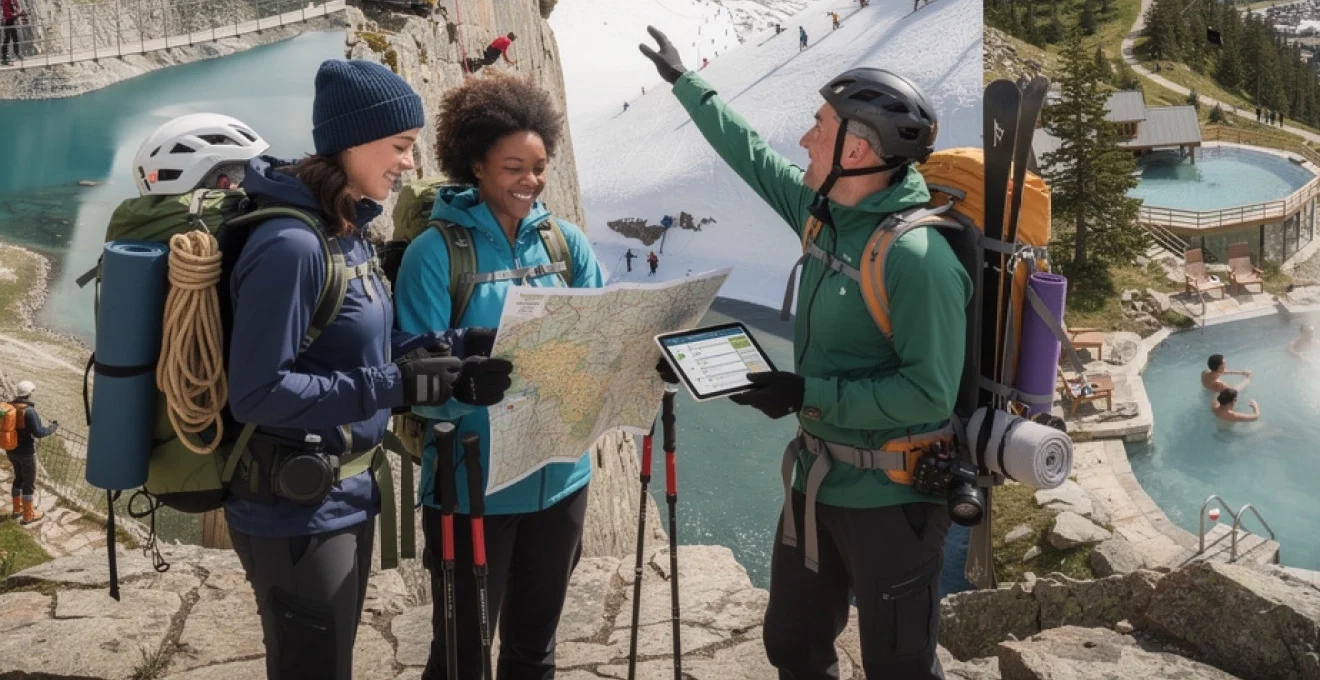
The modern traveller increasingly seeks experiences that challenge both body and soul, moving beyond traditional vacations towards transformative journeys that combine adrenaline-fueled adventures with restorative mountain retreats. This growing trend reflects a deeper understanding that true rejuvenation comes not just from rest, but from the powerful combination of pushing personal boundaries and finding profound peace in mountain sanctuaries. Research indicates that over 78% of adventure travellers now prioritise wellness components in their expedition planning, recognising that the most memorable escapes seamlessly blend physical challenges with therapeutic recovery.
Mountain environments offer the perfect backdrop for this dual approach, providing both rugged terrain for adventure activities and serene landscapes for wellness practices. The physiological benefits of altitude, combined with the psychological impact of dramatic mountain vistas, create an ideal setting where adventure and retreat complement rather than compete with each other. Whether you’re seeking to summit challenging peaks followed by spa treatments in alpine wellness centres, or combining coastal adventures with mountain meditation retreats, the possibilities for creating your ultimate escape are virtually limitless.
Strategic Multi-Destination itinerary planning for Adventure-Retreat combinations
Creating a successful adventure-retreat combination requires meticulous planning that considers the unique demands of both high-intensity activities and restorative experiences. The key lies in understanding how to sequence these contrasting elements to maximise both physical recovery and psychological benefits. Think of it like composing a symphony – the crescendos of adventure must be balanced with the gentle movements of retreat to create a harmonious overall experience.
Professional expedition planners recommend following the progressive intensity model, where activities gradually build in difficulty before transitioning to recovery phases. This approach prevents burnout while ensuring that each adventure component enhances rather than detracts from the subsequent retreat experience. For instance, beginning with moderate hiking activities and building towards technical climbing challenges allows your body to adapt while maintaining enthusiasm for the therapeutic mountain retreat that follows.
Seasonal weather patterns analysis for patagonia and swiss alps integration
Understanding seasonal variations becomes crucial when combining destinations like Patagonia’s Torres del Paine with Swiss Alpine retreats. Patagonia’s summer season (December to March) offers the most stable weather conditions for trekking, with temperatures ranging from 5°C to 15°C and reduced wind speeds. However, this period coincides with Europe’s winter season, creating opportunities to experience the Swiss Alps’ world-renowned winter wellness offerings, including thermal spa treatments and snow-based mindfulness practices.
The shoulder seasons present unique advantages for combining these destinations. March to April allows you to catch the tail end of Patagonia’s optimal trekking conditions while experiencing the Swiss Alps during their transitional period, when alpine flowers begin blooming and thermal springs offer particularly therapeutic benefits. This timing also provides cost advantages, as both destinations offer reduced accommodation rates during these transitional periods.
Transportation logistics between queenstown and banff national park
Connecting New Zealand’s adventure capital with Canada’s premier mountain retreat destination requires strategic planning to minimise travel fatigue while maximising your experience window. The most efficient routing involves flying from Queenstown to Auckland, then connecting through Vancouver to Calgary, with a final transfer to Banff. This journey typically requires 24-30 hours total travel time, making it ideal to schedule at the midpoint of your expedition as a natural transition between high-intensity and recovery phases.
Professional travel coordinators recommend booking flights with extended layovers in Vancouver to allow for jet lag mitigation strategies. This approach enables you to adjust gradually to the significant time zone change while beginning the mental transition from New Zealand’s rugged adventure landscape to Canada’s more serene mountain retreat environment. Consider booking accommodation in Vancouver for one night to break up the journey and explore the city’s renowned wellness scene as a gentle introduction to the retreat portion of your expedition.
Accommodation booking strategies for nepal himalayan lodges and costa rican Eco-Retreats
Booking accommodation for combination adventure-retreat expeditions requires understanding the unique characteristics of mountain lodges versus wellness retreat centres. Himalayan tea houses and lodges operate on a first-come, first-served basis during peak seasons, requiring flexible itinerary planning and backup accommodation options. In contrast, Costa Rican eco-retreats often require advance reservations of 3-6
months to secure preferred room types, wellness programmes, and spa schedules. To avoid misalignment, you should first lock in fixed-date components such as yoga intensives, detox programmes, or guided nature-therapy sessions in Costa Rica, then build your more flexible Himalayan lodge schedule around these anchor dates. This reverse-planning method helps you avoid the common scenario of having trekking days confirmed but missing out on the specific eco-retreat that supports your recovery goals.
When combining Nepal Himalayan lodges with Costa Rican eco-retreats, it is also wise to diversify your accommodation categories. In Nepal, mix simple tea houses with one or two higher-comfort lodges in places like Namche Bazaar or Pokhara to create intentional “recovery nodes” during your high-altitude adventure. In Costa Rica, consider alternating between rustic jungle cabins and more sophisticated wellness resorts so you experience both deep nature immersion and structured spa environments. Always confirm cancellation policies and deposit requirements, as mountain weather or health factors can force last-minute itinerary shifts.
Duration optimisation for torres del paine trekking and whistler mountain spa experiences
Balancing time spent on challenging trails with time dedicated to recovery is central to designing the ultimate adventure and mountain retreat combination. For most travellers with moderate to high fitness levels, an optimal split for a Torres del Paine and Whistler itinerary is approximately 60% adventure and 40% retreat. In practical terms, this often translates into 7–9 days of trekking in Patagonia, followed by 4–6 days of structured spa and wellness programming in Whistler’s alpine resorts. This ratio ensures that the physical stress of multi-day hiking is adequately offset by targeted recovery.
Within Torres del Paine, plan your trekking days with built-in micro-recovery windows. For example, position a shorter hiking stage or scenic boat day to Glacier Grey midway through your circuit to prevent cumulative fatigue. Once you transition to Whistler, front-load your stay with passive recovery modalities such as hydrotherapy circuits, deep-tissue massage, and sleep-focused wellness consultations. Only later in the stay should you introduce lighter activities such as forest bathing, gentle snowshoeing, or restorative yoga, allowing your body to follow a natural arc from exertion to deep restoration.
High-altitude adventure activities with therapeutic mountain wellness integration
High-altitude destinations inherently push your physiology, challenging your cardiovascular system, sleep patterns, and recovery capacity. When paired intelligently with therapeutic mountain wellness practices, however, these same environments can become powerful catalysts for long-term resilience and mental clarity. The goal is not simply to “survive” altitude but to use it as a structured stressor—much like weight on a barbell—balanced with intentional recovery that helps you adapt rather than burn out.
To create this synergy, you need to consider altitude exposure, exertion levels, and recovery modalities as interconnected variables rather than isolated choices. For instance, scheduling a demanding via ferrata route immediately after a long-haul flight can feel like trying to run a marathon the day you recover from a cold—technically possible but strategically unwise. By contrast, allowing 24–48 hours of gentle activity, hydration, and spa-based circulation therapies before your headline adventure can dramatically improve both performance and enjoyment.
Via ferrata climbing in dolomites combined with alpine thermal spa treatments
Via ferrata climbing in the Dolomites offers a unique combination of technical challenge and psychological exhilaration, making it an ideal centrepiece for an adventure-focused itinerary. Routes range from beginner-friendly traverses to highly exposed vertical sections that demand strong mental focus and efficient movement. Because these activities place intense demands on your forearms, core, and nervous system, pairing them with Alpine thermal spa treatments is more than a luxury—it becomes a strategic recovery tool that sustains performance across multiple climbing days.
Thermal spa circuits in regions like Val Gardena or Alta Badia typically include hydrotherapy pools, contrast baths, saunas, and relaxation lounges with panoramic views. Think of these as your “maintenance pit stops,” helping flush metabolic waste, reduce inflammation, and lower cortisol after hours on the rock. An effective pattern is to schedule two consecutive via ferrata days followed by one full or half-day dedicated to thermal recovery, including light mobility work and guided stretching. This cadence allows you to stack technically demanding routes while preventing the overuse injuries that often derail multi-day climbing holidays.
Everest base camp trekking paired with tibetan monastery meditation retreats
Combining the Everest Base Camp trek with a Tibetan monastery meditation retreat creates one of the most profound adventure-wellness journeys available. The trek itself exposes you to altitudes above 5,000 metres, demanding sustained physical effort, mental resilience, and careful acclimatisation. Integrating a monastery stay—either in the Khumbu region or as a follow-on in Nepal or Tibet—transforms the expedition from a purely physical challenge into a deep inner exploration. You are not just climbing towards a geographic destination; you are also descending into greater self-awareness.
From a practical standpoint, it is generally more effective to place the monastery component at the end of your trek rather than at the beginning. Early in the journey, your body is still adjusting to altitude, and your focus is often dominated by logistics, gear, and the novelty of the environment. After reaching Base Camp and descending to lower altitudes, however, your nervous system is primed for introspection. A 3–5 day stay in a monastery, with daily meditation, chanting, and silent periods, acts like an emotional “cool-down,” helping you integrate the intensity of the trek and return home with a clearer sense of what the experience has changed in you.
Chamonix extreme skiing integrated with french alpine wellness programmes
Chamonix has long been a magnet for extreme skiers and snowboarders seeking steep couloirs, off-piste powder, and glacier routes that demand both technical skills and robust risk management. These high-stress, high-reward days can be exhilarating, but without structured recovery, they can also lead to fatigue-related mistakes on the mountain. Integrating French alpine wellness programmes—ranging from sports physiotherapy to nutrition coaching and sleep optimisation—turns an intense ski holiday into a sustainable performance retreat.
An effective approach is to treat your time in Chamonix as an alternating sequence of “performance days” and “recalibration days.” On performance days, you might ride the Aiguille du Midi cable car for advanced off-piste runs or join guided ski-mountaineering tours. Recalibration days would then focus on targeted massage, guided stretching sessions, sauna use, and workshops on avalanche awareness or mental focus. This rhythm is similar to how elite athletes periodise training and recovery; you are simply applying the same model to your own adventure travel, ensuring that each descent is supported by a strong, well-rested body and a clear mind.
Rocky mountain national park backcountry hiking with colorado hot springs therapy
Backcountry hiking in Rocky Mountain National Park offers expansive routes that can take you well away from crowded trails, into high passes, alpine lakes, and wildlife-rich valleys. These days often involve sustained elevation gain, variable weather, and the psychological intensity of navigating more remote terrain. To counterbalance this, integrating Colorado hot springs therapy in locations such as Glenwood Springs, Ouray, or Steamboat Springs provides a powerful way to decompress both physically and mentally. The mineral-rich waters support muscle recovery, while the ambient mountain scenery reinforces the sense of retreat.
To make the most of this combination, structure your itinerary so that hot springs stays act as anchors before and after your most demanding backcountry segments. For example, you might schedule two warm-up hikes and a hot springs evening at the start, then tackle a 3–4 day backpacking loop, followed by a 2-day immersion in a hot springs resort with add-on spa treatments. This design mirrors interval training: periods of high output followed by purposeful recovery, which is far more effective than a continuous grind of long days with no restorative pause.
Coastal adventure destinations merged with mountain sanctuary experiences
Some of the most memorable adventure-retreat combinations emerge when you pair coastal environments with mountain sanctuaries, creating a dynamic interplay between sea-level exertion and high-altitude restoration. Surfing, sailing, and coastal trekking place different demands on your body compared to mountain hiking or climbing, engaging stabiliser muscles, balance, and cardiovascular endurance in unique ways. When you transition from ocean-based activities to mountain retreats, you effectively shift the “training environment,” much like changing disciplines in a multi-sport event.
To design an effective coastal-mountain itinerary, consider the direction of your altitude change and the type of recovery you will need. Starting at the coast—such as in Costa Rica, New Zealand’s South Island, or the Amalfi Coast—allows you to build baseline fitness with surfing, sea kayaking, or coastal trails before moving into mountain environments like Aoraki/Mount Cook, the Swiss Alps, or the Dolomites. This upward progression gives your cardiovascular system time to adapt while your nervous system benefits from the calming effect of the ocean before facing the more intense psychological demands of high altitude.
Equipment and gear coordination for Dual-Purpose Adventure-Wellness expeditions
Coordinating gear for a trip that includes both rugged adventure and refined mountain retreats can feel like packing for two different lives at once. The key is to think in terms of modular systems rather than individual items. Your base layer system, for example, should work just as well under a climbing harness or ski shell as it does under a casual fleece in the spa lounge. By designing overlapping use-cases, you reduce pack weight while maintaining versatility, a crucial factor when you are moving through airports, trains, and cable cars with your entire setup.
One effective strategy is to divide your packing list into three categories: performance essentials, recovery comfort items, and transition pieces. Performance essentials include technical shells, trekking boots, climbing harnesses, or avalanche safety gear—items you cannot easily rent or replace on-site. Recovery comfort items are compact luxuries such as a lightweight robe, travel foam roller, or eye mask that enhance sleep and relaxation. Transition pieces bridge both worlds: merino tops that work for hiking and casual dinners, or quick-dry trousers that look polished enough for lodge restaurants while performing on the trail.
Budget allocation frameworks for premium Adventure-Retreat combination packages
Multi-destination journeys that combine high-end adventure with curated mountain retreats can quickly escalate in cost if you do not approach budgeting with the same strategic mindset you apply to route planning. A useful framework is to allocate your budget across four primary pillars: transportation, guided experiences, accommodation, and wellness services. For many travellers seeking premium yet efficient value, a balanced allocation might look like 25% to long-haul and regional transport, 30% to guided adventure and safety support, 30% to lodging, and 15% to spa and wellness treatments. Adjusting these percentages based on your priorities helps prevent overspending in one category at the expense of core experiences.
It can be tempting to economise on guides or safety equipment in favour of more luxurious accommodation or additional spa sessions, but this often proves to be a false economy. Investing in certified guides, avalanche courses, or high-quality gear rental can be compared to buying good insurance on a complex project—it reduces the risk of costly accidents, missed objectives, or emergency evacuations. If your budget feels tight, consider shortening the overall trip by a day or two, or opting for shoulder-season dates, rather than compromising on safety-critical components of your adventure-retreat itinerary.
Risk assessment and safety protocols for Multi-Terrain expedition planning
Combining coastal, alpine, and high-altitude environments within a single journey inherently increases the complexity of your risk profile. Instead of viewing safety as a checklist item at the end of your planning, integrate it from the beginning as a core design principle. Start by mapping out the main risk categories—altitude sickness, weather volatility, technical terrain, transport delays, and health issues—then assign mitigation strategies to each. This might include building buffer days into your schedule, carrying satellite communication devices, or booking with operators who have clear evacuation and medical contingency plans.
Think of robust safety planning as the harness that allows you to lean out over the edge of your comfort zone without falling. Prior to departure, ensure you have up-to-date travel insurance that explicitly covers adventure sports at the altitudes and locations you will visit. Share your itinerary, including emergency contacts and check-in points, with a trusted person at home. On the ground, normalise daily risk check-ins with your group or guide—reviewing weather forecasts, snowpack conditions, or trail reports—so that safety becomes a shared responsibility rather than an afterthought. By embedding these protocols into your multi-terrain expedition, you create the psychological freedom to be fully present in both the high-adrenaline moments and the deep, restorative calm of your mountain retreats.