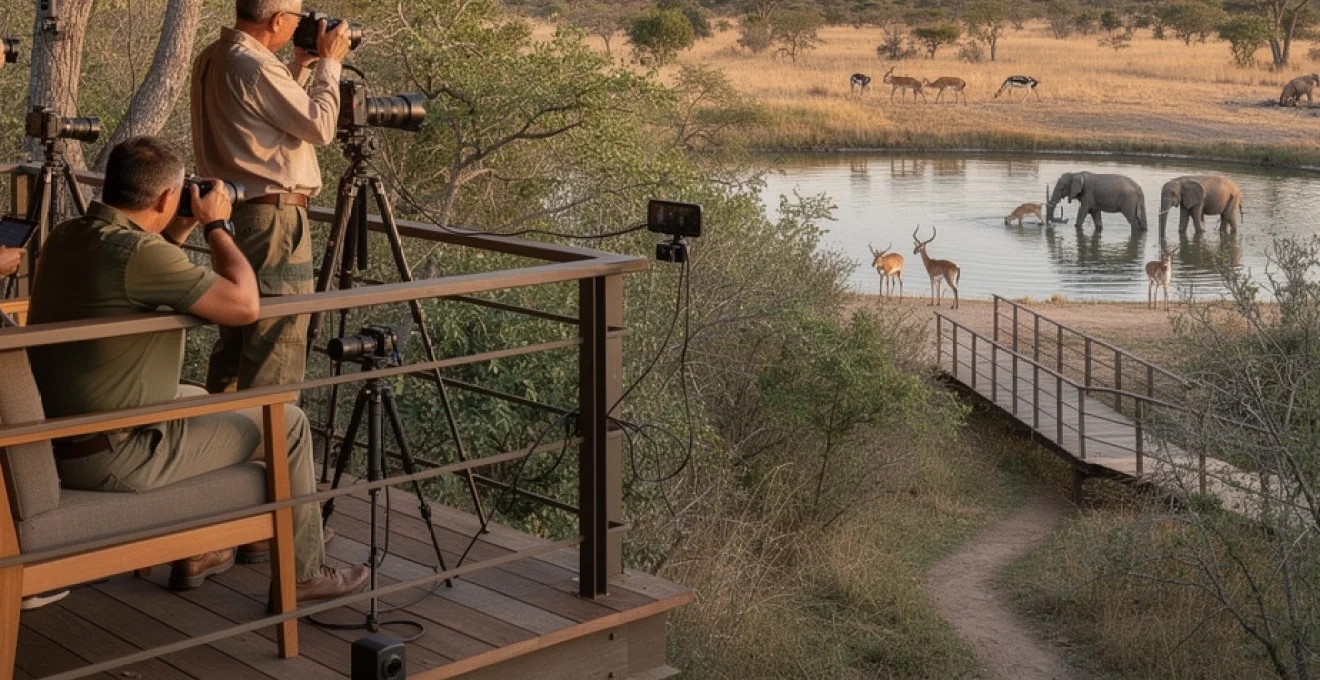
The evolution of wildlife observation has transformed dramatically over recent decades, with private viewing decks emerging as sophisticated solutions for ethical wildlife encounters. These carefully designed structures represent a paradigm shift from traditional wildlife tourism, offering visitors intimate yet respectful access to natural habitats whilst minimising disturbance to wildlife populations. Modern observation platforms combine architectural excellence with ecological sensitivity, creating spaces where humans can witness the drama of wild nature unfold without compromising animal welfare.
The growing demand for authentic wildlife experiences has driven innovation in observation infrastructure design. Private viewing decks serve multiple purposes beyond mere observation: they function as educational platforms, conservation tools, and economic drivers for local communities. Research indicates that well-designed wildlife hides can increase visitor satisfaction by up to 85%, whilst simultaneously reducing habitat disturbance compared to traditional ground-level observation methods. This dual benefit makes private viewing structures invaluable assets in contemporary conservation strategies.
Contemporary wildlife observation facilities must balance visitor expectations with conservation imperatives. The challenge lies in creating structures that provide exceptional viewing opportunities whilst maintaining the natural behaviour patterns of observed species. Private viewing decks address this challenge through sophisticated design principles that prioritise both human experience and animal welfare. These structures represent the future of sustainable wildlife tourism, offering blueprint solutions for destinations seeking to develop responsible nature-based economies.
Architectural design principles for Wildlife-Focused observation platforms
The foundation of effective wildlife observation infrastructure lies in understanding both human needs and animal behaviour. Successful viewing platforms require meticulous planning that considers sightlines, structural integrity, and environmental integration. Modern observation structures must function as seamless extensions of the natural environment, rather than imposing artificial elements that disrupt ecological balance. This approach demands collaboration between architects, wildlife biologists, and conservation specialists to ensure optimal outcomes for all stakeholders.
Elevated positioning and sightline optimisation in kruger national park hides
Elevation serves as the cornerstone of effective wildlife observation design, offering multiple advantages over ground-level structures. Kruger National Park’s observation hides demonstrate exemplary elevation strategies, positioning viewers 4-6 metres above ground level to maximise visibility whilst maintaining safe distances from potentially dangerous wildlife. This elevated approach reduces human scent distribution at animal level, minimising behavioural disruption amongst observed species. The psychology of elevation also enhances visitor experience, creating a sense of security that allows for relaxed, extended observation periods.
Strategic height placement must consider seasonal vegetation changes, ensuring year-round visibility despite foliage fluctuations. Observation platforms in Kruger utilise adjustable viewing panels and multiple height options to accommodate different species’ behaviour patterns and habitat preferences. The park’s success demonstrates that thoughtful elevation planning can increase wildlife sighting frequency by 60% compared to ground-level observation points.
Structural integration with natural habitat corridors
Habitat corridors represent critical pathways for wildlife movement, and observation structures must complement rather than obstruct these natural highways. Integration strategies involve positioning viewing platforms adjacent to, rather than across, established animal routes. This placement allows continuous wildlife movement whilst providing observers with front-row access to natural behaviours. Successful integration requires detailed habitat mapping and multi-seasonal movement studies to identify optimal positioning opportunities.
Material selection plays a crucial role in habitat integration, with natural timber and earth-toned finishes helping structures blend seamlessly into surrounding environments. Research from European rewilding projects shows that well-integrated observation structures can actually enhance habitat connectivity by creating refuge points and reducing human disturbance in sensitive areas. The key lies in designing structures that function as positive landscape elements rather than intrusive additions.
Sound dampening materials and acoustic design for minimal wildlife disturbance
Acoustic considerations significantly impact wildlife observation success, as many species rely heavily on auditory cues for survival behaviours. Sound dampening materials and design techniques can reduce human-generated noise by up to 70%, creating quieter environments that encourage natural animal behaviour. Double-wall construction using sound-absorbing materials, coupled with soft flooring surfaces, minimises footstep transmission and conversation echoes that might alert wildlife to human presence.
Strategic placement of sound barriers and acoustic baffles further enhances noise reduction without compromising structural integrity or viewing opportunities. Modern observation platforms incorporate whisper-quiet ventilation systems and eliminate squeaking
door mechanisms that could startle animals at close range. Even simple design choices, such as installing soft-close hinges and using rubberised buffer stops on windows and seating, contribute to an overall acoustic profile that keeps wildlife relaxed and behaviourally natural. In essence, the best private viewing decks feel almost invisible from a sound perspective, allowing you to observe without announcing your presence to every animal within earshot.
Weather-resistant construction techniques for Year-Round accessibility
For private viewing decks to deliver consistent wildlife and nature encounters, they must remain usable in all but the most extreme conditions. Weather-resistant construction techniques, including corrosion-resistant fasteners, UV-stable finishes, and moisture-managed wall assemblies, ensure that hides and decks maintain structural integrity despite intense sun, heavy rain, or seasonal temperature swings. In regions with high humidity or monsoon patterns, elevated foundations and well-ventilated substructures prevent rot and mould, extending the lifespan of timber elements and keeping the environment healthy for visitors and guides alike.
Year-round accessibility also depends on thoughtful detailing that anticipates local climate realities. Deep roof overhangs and covered walkways protect guests from sun and rain while allowing uninterrupted viewing, and wind-bracing systems reduce movement that might otherwise cause noise or discomfort. In colder climates, insulated panels, draught-proof openings, and passive solar orientation allow for comfortable observation without the need for energy-intensive heating systems. By investing in resilient construction, operators reduce long-term maintenance costs and ensure that ethical wildlife observation remains possible across seasons, rather than being limited to a narrow “fair weather” window.
Camouflage and visual screening methods using indigenous vegetation
Visual integration with the surrounding habitat is just as important as structural durability. Effective camouflage in private viewing decks relies on breaking up outlines, softening edges, and using colours and textures that mimic the local environment. Designers frequently specify cladding in muted, earth-toned palettes and incorporate natural materials such as rough-sawn timber, stone, and thatch to blend with existing vegetation. From an animal’s perspective, a low-reflective, irregularly shaped structure is far less intrusive than a smooth, angular building that catches the light.
Indigenous vegetation provides one of the most powerful tools for visual screening. By planting native shrubs, grasses, and trees around access paths and deck perimeters, operators can “feather” the transition between habitat and structure, much like a natural hide on the landscape. This botanical buffer not only conceals human movement but also offers additional microhabitats, supporting pollinators, birds, and small mammals. When you approach a well-designed hide through a corridor of local plants rather than an exposed walkway, you reduce the risk of alerting wildlife while also experiencing a more immersive, nature-rich journey from your lodge or vehicle to the viewing platform.
Strategic placement methodologies for maximum wildlife visibility
Even the most advanced observation deck will underperform if it is poorly sited. Strategic placement methodologies combine ecological data, traditional fieldcraft, and on-the-ground experience to position private viewing decks where wildlife naturally congregates. Rather than forcing encounters by baiting or disturbance, responsible operators read the landscape: they analyse terrain, vegetation, water availability, and historical sightings to map out “natural theatres” of animal behaviour. The goal is simple yet powerful: place people where the animals already want to be, then let nature write the script.
Migration route analysis and seasonal movement pattern mapping
Many iconic wildlife spectacles are driven by seasonal movements, from antelope migrations in African savannas to bird flyways along coastal wetlands. Understanding these shifting patterns is essential when planning permanent or semi-permanent viewing structures. Conservation teams increasingly rely on GPS collar data, camera-trap records, and long-term ranger observations to chart migration corridors and seasonal hotspots. By overlaying these datasets on high-resolution habitat maps, planners identify locations that offer reliable wildlife passage while still allowing for adequate stand-off distances to protect sensitive species.
Private viewing decks positioned along these corridors act like ethically placed “balconies” onto natural movement. For example, a hide overlooking a shallow river crossing may deliver exceptional sightings during dry seasons when animals converge on dwindling water, yet remain relatively quiet at other times of the year. This seasonality is not a flaw; it is a feature that reinforces the natural rhythm of the landscape. By aligning infrastructure with migration route analysis, operators can advise guests on the best times to visit for specific experiences, creating realistic expectations and avoiding pressure to manipulate wildlife movements artificially.
Water source proximity and drinking behaviour observation points
Water is one of the most reliable attractors of wildlife, making it a focal point for private viewing deck placement. Natural springs, pans, river bends, and artificial but ecologically managed waterholes become stage sets where multiple species interact throughout the day. Placing observation platforms at a considered distance and downwind of these sources allows visitors to watch undisturbed drinking, bathing, and social behaviours. The key is to maintain unobstructed sightlines while avoiding any perception of “ambush” from the animal’s point of view.
Designers must also account for hydrological dynamics when positioning decks near water. Seasonal fluctuations can dramatically alter shorelines, vegetation density, and water clarity, all of which influence animal behaviour and viewing quality. Elevated decks set back from the immediate bank or pan edge usually provide the most sustainable vantage point, protecting riparian vegetation and reducing erosion from foot traffic. When done well, a single water-focused hide can deliver a continuous narrative of life in the wild, from dawn visits by shy antelope to nocturnal appearances by predators and scavengers, all without the need for vehicles to cycle repeatedly around sensitive watering sites.
Feeding ground surveillance and Predator-Prey interaction zones
Open grazing areas, forest clearings, and ecotones where different habitats meet often become feeding hotspots, drawing herbivores and, in turn, their predators. Locating private viewing structures along the edges of these zones can provide exceptional opportunities to witness predator-prey interactions while keeping human presence discreet. Much like choosing a seat in a theatre, the ideal vantage point offers a wide field of view, limited backlighting, and minimal visual clutter that might obscure tracking, stalking, or flight behaviour.
However, ethical wildlife operators are careful not to cross the line into exploitation. Platforms should never be sited or used in ways that drive animals into confined spaces or funnel them towards waiting predators for the sake of dramatic sightings. Instead, placement is informed by ecological process: natural game trails, wind direction, and cover availability for both hunter and hunted. By respecting these natural dynamics, private viewing decks become observational windows rather than influencing factors, allowing you to observe the raw realities of the food chain without tipping the balance.
Nesting site monitoring positions for breeding season documentation
Breeding seasons offer unique insights into wildlife behaviour but also pose heightened risks of disturbance. Nesting birds, denning carnivores, and burrowing mammals are particularly sensitive to repeated human intrusion. As such, nesting site monitoring positions demand even more stringent placement criteria than general observation decks. Researchers and eco-tourism operators increasingly collaborate to determine safe stand-off distances, approach routes, and line-of-sight angles that allow documentation of parental care, courtship displays, and fledging events without causing stress.
Rather than placing decks directly above or opposite nests, best practice favours oblique angles and partial screening, using vegetation or natural landforms as visual buffers. Temporary or modular hides can be especially useful in these contexts, allowing removal once the breeding season has passed to avoid turning sensitive areas into perennial human focal points. When nesting site viewing is managed with this level of care, guests gain powerful educational experiences—witnessing, for example, the meticulous attention of a raptor at its eyrie—while species enjoy the protection of clearly defined, non-intrusive observation protocols.
Technology integration in modern private viewing infrastructure
Contemporary private viewing decks increasingly blend traditional fieldcraft with cutting-edge technology to enrich wildlife and nature encounters. Rather than replacing the human eye, these tools extend our senses, enabling clearer images, better data collection, and safer distances from sensitive animals. When integrated thoughtfully, technology transforms decks into multifunctional platforms that support photography, citizen science, and conservation research, all while deepening the visitor’s connection to the landscapes they are observing.
DSLR camera mount systems and telephoto lens stabilisation platforms
One of the most immediate enhancements to a private viewing deck is the inclusion of stable, ergonomic camera mount systems. Fixed gimbal heads, adjustable ball mounts, and integrated rail systems along the deck railing allow photographers to track moving subjects smoothly without the fatigue associated with hand-holding heavy telephoto lenses. By reducing camera shake, these stabilisation platforms improve image sharpness, especially in low light when shutter speeds drop but wildlife activity peaks.
From a design perspective, the challenge lies in balancing stability with flexibility. Mounts must be robust enough to withstand constant use and occasional rough handling, yet discreet enough not to obstruct non-photographers’ views. Some operators install modular mounting points that accept both professional DSLR gear and lighter mirrorless systems, ensuring that both seasoned photographers and enthusiastic beginners can benefit. As a result, you can focus on composition and storytelling, rather than fighting with equipment every time a lion yawns or an eagle takes flight.
Motion-activated trail camera networks and remote monitoring capabilities
Motion-activated trail cameras have become indispensable tools for both conservationists and wildlife enthusiasts, and private viewing decks are ideal hubs for coordinating these networks. Strategically positioned cameras along access paths, nearby clearings, and animal corridors can capture nocturnal or elusive species that visitors might never see in person. Live or time-lapse feeds can then be displayed on small screens within the deck or accessed remotely by researchers, adding a hidden layer of activity to the visible wildlife encounters outside.
Remote monitoring capabilities also contribute to ethical management. If trail camera data indicate that certain species are showing signs of stress or shifting away from heavily used observation sites, managers can adjust visitation schedules, limit group sizes, or temporarily close specific hides. In this way, technology acts as an early-warning system, helping operators keep their promise of minimal disturbance. For guests, viewing an overnight time-lapse of a waterhole or forest edge can feel like reading the “secret diary” of the habitat, revealing patterns and species they might otherwise never imagine.
Thermal imaging equipment integration for nocturnal wildlife tracking
Nocturnal wildlife represents a vast, often unseen portion of biodiversity, and thermal imaging technology now offers a way to observe these species responsibly. Handheld or deck-mounted thermal scopes detect heat signatures rather than relying on visible light, meaning you can locate and follow animals in darkness without using powerful spotlights that may disrupt behaviour or impair night vision. For species such as large carnivores, owls, or shy antelope, this non-invasive visibility is transformative, turning what was once a black curtain into a rich, behavioural landscape.
Integrating thermal imaging into private viewing decks requires clear ethical guidelines. Operators should train guides to avoid prolonged following of a single animal or invasive scanning of nesting or roosting sites. Used judiciously, thermal equipment can help you understand patterns of movement, predator-prey dynamics, and habitat use after sunset, all while keeping the environment visually dark and calm. It is analogous to using a stethoscope rather than opening a chest: we gain insights into the “heartbeat” of nocturnal ecosystems without the trauma of direct exposure.
Smartphone photography accessories and social media content creation tools
Not every visitor arrives with professional gear, and many prefer to rely on smartphones for capturing memories. Modern private viewing decks can cater to this reality by offering simple yet effective smartphone accessories. Clip-on telephoto lenses, small stabilising grips, and integrated charging points allow guests to record high-quality images and videos from a respectful distance. In addition, providing discreet device stands or shelf ledges at optimal viewing height helps reduce the temptation for visitors to lean dangerously over railings or jostle others for space.
Because social media plays a powerful role in shaping travel choices and conservation awareness, some operators go a step further by integrating subtle content creation tools. Thoughtful placement of small, non-intrusive information plaques, for example, helps guests caption their posts accurately with species names or conservation facts. Wi-Fi access, when feasible, can enable real-time sharing of ethical wildlife encounters, amplifying the message that respectful observation and high-quality experiences go hand in hand. When you leave a deck not just with photos, but with stories and data you are proud to share, the digital footprint of your visit can support broader conservation narratives.
Case studies from premier wildlife destinations and private reserves
Across the globe, leading wildlife destinations are demonstrating how well-designed private viewing decks can elevate both conservation outcomes and visitor satisfaction. In southern Africa, for instance, several private reserves bordering Kruger National Park have transformed former hunting blinds into sophisticated hides, pairing elevated structures with strict codes of conduct that prohibit baiting or harassment. Guests routinely report more meaningful wildlife encounters and a deeper appreciation for natural behaviour compared to fast-paced vehicle safaris alone.
European rewilding landscapes offer another compelling example. In areas where large carnivores such as wolves, lynx, and bears are making a comeback, carefully sited hides have become vital tools for building local support. By channelling tourism revenue directly into habitat restoration and community enterprises, these platforms showcase wildlife not as a threat but as a living asset. Similar approaches in North American and Asian reserves—ranging from bear-viewing platforms along salmon rivers to forest canopy walkways for primate observation—highlight a shared lesson: when private viewing infrastructure is guided by science and ethics, it can transform regional economies while leaving a light ecological footprint.
Psychological and physiological impact of controlled wildlife encounters
Beyond the obvious thrill of seeing a rare animal up close, controlled wildlife encounters from private viewing decks yield measurable psychological and physiological benefits. Studies on nature exposure consistently show reductions in stress markers such as cortisol levels, alongside improvements in mood, attention, and overall wellbeing. The quiet, immersive environment of a hide—away from engine noise and crowd pressure—encourages slower breathing, sustained focus, and a meditative state often described as “soft fascination.” In this state, your mind can wander gently while remaining anchored to the subtle movements and sounds of the landscape.
There is also a profound cognitive dimension to these experiences. When you observe undisturbed behaviour over extended periods, you begin to recognise individual animals, patterns, and relationships, fostering empathy and a sense of kinship with non-human life. This shift from “spectator” to “witness” can be transformative, leading many visitors to change their attitudes toward consumption, travel, and conservation support. Controlled encounters, by definition, involve clear boundaries—no feeding, no touching, no chasing—which helps reinforce the psychological message that wild animals are autonomous beings, not props for human entertainment.
Maintenance protocols and Long-Term sustainability of private observation structures
To ensure that private viewing decks continue to enhance wildlife and nature encounters over decades, rather than years, rigorous maintenance protocols are essential. Regular inspections of structural components—foundations, support beams, railings, and access stairs—help prevent small defects from becoming safety hazards. In many leading reserves, maintenance schedules are aligned with seasonal cycles: major works take place during low-visitation periods or outside key breeding and migration windows to minimise disturbance. This long-term planning reflects a recognition that infrastructure, like ecosystems, must be managed adaptively rather than reactively.
Sustainability also depends on material choices and waste management practices. Where possible, operators favour locally sourced, certified timber, recycled steel, and low-VOC finishes that reduce environmental impact. Solar-powered lighting, rainwater harvesting for cleaning, and composting or sealed waste systems further minimise the ecological footprint of each structure. Perhaps most importantly, there is an ongoing feedback loop between guides, guests, and conservation staff: if animal behaviour suggests that a deck is becoming too prominent or intrusive, viewing protocols can be adjusted, vegetation buffers can be enhanced, or in extreme cases, structures can be relocated or decommissioned. In this way, private viewing decks remain dynamic elements of the landscape, evolving alongside the wildlife and habitats they are designed to celebrate and protect.