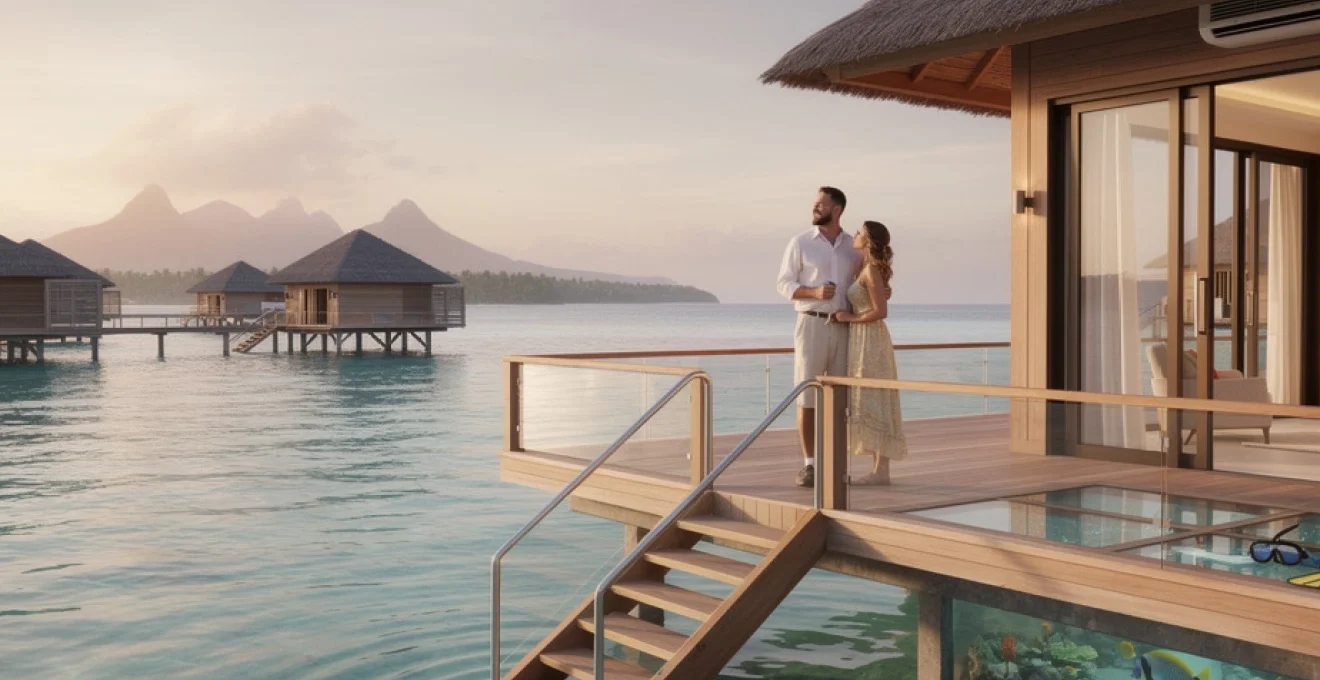
The image of waking up to crystal-clear turquoise waters lapping beneath your private villa, with tropical fish visible through the glass floor panels at your feet, has captivated travellers worldwide. Overwater bungalows represent one of the most distinctive accommodation experiences available in luxury travel, combining architectural innovation with unparalleled access to marine environments. These suspended sanctuaries offer something conventional beachfront hotels simply cannot match: a complete immersion into aquatic ecosystems, where the boundary between accommodation and nature dissolves entirely. Yet with nightly rates frequently exceeding £1,000 and sometimes reaching £5,000 or more at ultra-luxury properties, the question becomes increasingly pressing for discerning travellers. Understanding what you’re actually paying for—from structural engineering marvels to exclusive marine access—requires examining every aspect of these unique water-based accommodations.
Architectural design and structural features of overwater bungalow accommodation
The engineering behind overwater bungalows represents a fascinating intersection of traditional building techniques and contemporary architectural innovation. These structures must withstand constant exposure to saltwater, temperature fluctuations, wind forces, and the gradual settling of support systems whilst maintaining the aesthetic appeal that makes them so desirable. Understanding the construction methods employed reveals much about why these accommodations command premium pricing and what differentiates exceptional properties from merely adequate ones.
Traditional maldivian Pile-Dwelling construction versus modern pontoon systems
The original overwater structures in the Maldives employed pile-dwelling construction, where individual wooden or concrete posts are driven deep into the lagoon floor to create a stable foundation. This method, inspired by centuries-old fishing village architecture, provides exceptional stability and longevity. Each villa typically rests on 15-30 reinforced concrete piles, with the exact number depending on the structure’s size and the lagoon’s depth. The spaces between piles allow natural water circulation, which helps maintain the health of coral ecosystems beneath.
Modern pontoon systems offer an alternative approach, particularly in deeper lagoons where pile installation becomes prohibitively expensive. These floating platforms use sealed chambers filled with foam or air to maintain buoyancy, anchored to the seabed through flexible mooring systems. Pontoon-based villas can actually move slightly with wave action, which some guests find disconcerting whilst others barely notice. The construction method significantly affects your experience: pile-based structures feel rock-solid underfoot, whilst pontoon systems may exhibit subtle movement during storms or high winds.
Glass floor panels and marine observation infrastructure
Glass floor panels have become a signature feature of overwater bungalows, transforming your accommodation into a private aquarium viewing station. These panels typically consist of multiple layers of tempered glass, often incorporating low-iron glass for exceptional clarity. The thickness ranges from 40mm to 60mm depending on the panel size, engineered to withstand the weight of furniture and guests whilst maintaining optical quality. Strategic placement beneath coffee tables, beside beds, or in dedicated viewing sections allows you to observe marine life without disturbing your daily activities.
However, maintaining these glass panels presents ongoing challenges. Algae growth on the exterior surface can cloud your view within days if not regularly cleaned by resort staff. The most luxurious properties assign staff to scrub these panels every 2-3 days using specialized underwater cleaning equipment. Some resorts have introduced innovative solutions, such as UV-coating treatments that inhibit biological growth or retractable covers that protect the glass when rooms are vacant. The quality and maintenance of glass floor panels serves as an excellent indicator of overall resort standards.
Direct lagoon access steps and private deck configurations
The ability to descend directly into pristine waters from your private accommodation represents one of the most compelling features of overwater bungalows. Access systems vary considerably between properties: some feature simple wooden ladders, whilst others incorporate graduated steps that provide easier entry and exit. The most thoughtfully designed systems include handrails, underwater platforms at varying depths, and strategically positioned lights for evening swims. Properties catering to older guests or families often install both ladder and step configurations to accommodate different mobility levels.
Private deck configurations merit careful consideration when selecting your overwater accommodation. Entry-level bungalows might offer compact 10-15
square metre sun decks with a couple of loungers and a small table, whilst premium overwater villas may boast expansive multi-level terraces, shaded cabanas, outdoor dining areas and even private infinity pools cantilevered over the lagoon. Orientation matters as much as size: some decks face sunrise for tranquil early-morning swims, others face sunset for dramatic evening views. Corner bungalows at the end of jetties generally offer the most panoramic vistas and the greatest privacy, which is why they often carry the highest nightly rates. When assessing whether a private overwater bungalow is worth the splurge, studying the deck layout, sun exposure and access points on the resort’s map can be just as important as looking at interior photos.
Climate control and saltwater corrosion management in overwater structures
Maintaining comfortable temperatures and air quality in a structure exposed to constant sun and sea breeze presents unique challenges. Most high-end overwater bungalows rely on a combination of high-efficiency air-conditioning systems, ceiling fans and cross-ventilation through louvred windows or sliding doors. Because these villas stand over open water, they tend to lose heat more quickly than land-based rooms at night, so well-insulated roofing and double-glazed windows are essential to maintain a stable indoor climate. Resorts that invest in modern inverter air-conditioning units and smart thermostats often achieve better energy efficiency, which can reduce the environmental footprint of your stay.
The battle against saltwater corrosion is an ongoing, invisible cost baked into the premium you pay for overwater accommodation. Salt-laden air accelerates the degradation of metal fixtures, electrical components and even concrete reinforcement bars, requiring constant inspection and proactive maintenance. Many contemporary overwater villas use marine-grade stainless steel, treated timber and fibre-reinforced polymers, along with specialist paints and sealants designed for offshore platforms. Some properties schedule partial jetty closures during low season to undertake structural checks and repainting; if your travel dates are flexible, you may wish to avoid those windows to ensure minimal disruption. Understanding that a portion of the rate funds this intensive upkeep helps explain why overwater suites often remain significantly more expensive than comparable beachfront villas.
Premium overwater villa destinations: comparative analysis of global hotspots
Once you understand how overwater bungalows are built, the next question is where to experience them. Not all overwater destinations are created equal: lagoon depth, reef health, service culture and accessibility all influence whether a private bungalow is worth the splurge for your particular trip. Some islands excel in ultra-luxury seclusion, whilst others balance water-villa glamour with cultural immersion or easier flight connections. By comparing the main global hotspots, you can decide whether to prioritise barefoot luxury, value for money, or a specific bucket-list setting.
Maldives atolls: four seasons landaa giraavaru and soneva jani water retreats
The Maldives has become almost synonymous with the concept of private overwater bungalows, particularly at the ultra-luxury end of the market. Properties such as Four Seasons Landaa Giraavaru and Soneva Jani have redefined what an overwater suite can be, offering multi-bedroom water retreats with private pools, separate staff quarters and even waterslides plunging directly into the lagoon. Nightly rates frequently start around £2,000–£3,000 in high season and can exceed £10,000 for the largest residences, placing them firmly in aspirational territory for most travellers. So, are Maldivian overwater villas worth the splurge?
For honeymooners and special-occasion travellers seeking the archetypal “villa on stilts in a turquoise lagoon” experience, the Maldives often delivers the purest version of that fantasy. Landaa Giraavaru sits in the UNESCO-listed Baa Atoll Biosphere Reserve, offering exceptional marine biodiversity and strong conservation credentials, including a pioneering manta ray research project. Soneva Jani, meanwhile, is renowned for its expansive overwater platforms, retractable bedroom roofs for stargazing, and a strong emphasis on sustainability, from solar power to on-site glass recycling. The trade-off is that activities outside the resort are limited; you are essentially paying for an exquisitely designed bubble of seclusion rather than cultural exploration or nightlife.
French polynesia: bora bora InterContinental thalasso spa and st. regis resort
French Polynesia offers a different flavour of overwater luxury, with volcanic peaks rising dramatically from the sea and a distinctive Polynesian cultural backdrop. In Bora Bora, the InterContinental Thalasso Spa and St. Regis Resort occupy prime positions on motus (small islets) facing the iconic Mount Otemanu. Overwater bungalows here often feature thatched roofs, carved wood details and a more traditional aesthetic than the ultra-contemporary designs of some Maldivian villas. Nightly rates for entry-level overwater suites typically start around £1,200–£1,800 in peak season, placing them slightly below the ultra-luxury Maldivian properties but still firmly in splurge territory.
What you gain in Bora Bora is the combination of tranquil lagoon living with dramatic land scenery and more varied excursion possibilities. From your private deck you might watch outrigger canoes glide across the lagoon, then head ashore for a 4×4 tour into the island’s lush interior or a visit to local craft markets. The InterContinental Thalasso is particularly known for its deep-sea water thalassotherapy spa, which pumps nutrient-rich ocean water from 900m below the surface, while the St. Regis boasts some of the largest standard overwater villas in the region. If the postcard image of a private overwater bungalow framed by jagged green peaks is what you have in mind, French Polynesia can make the premium feel justifiable.
Southeast asian alternatives: pangkor laut malaysia and song saa private island cambodia
Not everyone has the budget—or the desire—to fly halfway across the world to the Maldives or Bora Bora. Southeast Asia offers compelling alternatives for private overwater bungalows, often at lower price points and with easier access from major hubs such as Singapore, Kuala Lumpur and Bangkok. Pangkor Laut Resort in Malaysia and Song Saa Private Island in Cambodia both provide overwater villa experiences that blend tropical seclusion with regional cultural influences. Whilst lagoon water clarity and reef quality may not always match the Maldives, these destinations can offer a better value proposition for travellers balancing cost and experience.
Pangkor Laut, set on a privately owned island off the west coast of Peninsular Malaysia, features sea villas perched above the Straits of Malacca, with traditional-style architecture and lush jungle backdrops. Nightly rates for overwater accommodation can start under £500 in shoulder seasons, making this one of the more accessible ways to test whether an overwater bungalow is worth the splurge for you. Song Saa, located in Cambodia’s Koh Rong Archipelago, positions itself as an eco-luxury retreat, with overwater villas facing a protected marine reserve and a strong emphasis on community engagement and conservation. Here, you may trade the blindingly turquoise hues of Maldivian lagoons for a more rugged, emerald-toned seascape, but gain a richer sense of place and local culture.
Caribbean overwater accommodation: sandals grande st. lucian and aruba developments
For travellers based in Europe or North America, flight times to the Indian Ocean or South Pacific can make the Caribbean’s emerging overwater villa scene particularly attractive. Resorts such as Sandals Grande St. Lucian in Saint Lucia and new developments in Aruba have introduced private overwater bungalows with a distinctly Caribbean flair. At Sandals, the all-inclusive model includes dining, premium drinks and many activities, which can make the high nightly rates—often around £1,500–£2,500 per couple—easier to compare against à la carte pricing in other regions. The villas themselves typically feature glass floor panels, overwater hammocks and butler service, appealing to honeymooners and couples seeking a “no surprises” romantic escape.
Aruba and other Dutch Caribbean islands are beginning to add overwater suites to existing luxury resorts, leveraging calm, shallow bays rather than deep outer reefs. Water clarity and marine life may be less dramatic than in more remote atolls, but the trade-off comes in the form of better air connections, English-friendly service and a lively off-resort scene. If you like the idea of a private overwater bungalow but also want access to casinos, shopping and beach bars, these Caribbean options can provide a hybrid experience. Carefully comparing what is—and isn’t—included in the nightly rate is essential here, as the headline price can sometimes mask additional costs for transfers, premium drinks or specific activities.
Cost-benefit analysis: overwater suite pricing versus beachfront villa rates
With so many enticing destinations, it is easy to get swept up in dreamy imagery and overlook the hard numbers. Private overwater bungalows often carry a substantial premium over even very luxurious beachfront villas at the same property. To decide whether that extra cost is worth it, you need to consider not just the nightly rate but what kind of experience you value most. Are you paying for a marginally better view, or for a fundamentally different way of inhabiting the seascape?
Nightly rate premiums across different resort categories and seasons
Across many resorts, overwater bungalows command a 30–80% premium over comparably sized beachfront or garden villas. At some flagship Maldivian and Bora Bora properties, that premium can exceed 100%, especially for end-of-pontoon suites with private pools. Seasonality plays a major role: in peak months (often December to March in the tropics), nightly rates can double compared with shoulder periods, making the cost-benefit equation very different depending on when you travel. In low season, strategic travellers sometimes secure overwater villas for only slightly more than high-season beach rooms, effectively “upgrading experience” rather than “upgrading room.”
When evaluating whether overwater accommodation is worth the splurge, it helps to calculate the incremental cost per day relative to the base room category you would otherwise book. If a beachfront villa is £700 per night and an overwater bungalow is £1,400, you are paying an extra £700 daily for direct lagoon access, enhanced privacy and the intangible magic of sleeping above the sea. For a three-night stay, that difference might feel palatable as a once-in-a-lifetime treat; for ten nights, the additional outlay becomes substantial. Many seasoned travellers therefore adopt a hybrid strategy: several nights over water for the “wow factor,” followed by a move to a more economical beach villa.
All-inclusive package structures and hidden supplementary charges
One of the key variables in your cost-benefit analysis is whether your chosen resort is fully all-inclusive, partially inclusive or primarily à la carte. An overwater bungalow at an all-inclusive property that covers meals, drinks and non-motorised water sports may, in practice, offer similar overall trip costs to a cheaper room at a resort where dining and activities are priced separately. At first glance, the nightly rate for a private overwater villa in the Maldives might seem eye-watering; once you factor in gourmet dinners, drinks at sunset and daily excursions, the relative value can become more nuanced.
Hidden supplementary charges can also tilt the equation. Seaplane or speedboat transfers to remote atolls in the Maldives, for example, regularly add £300–£800 per person to your stay and are often mandatory. Some properties levy additional fees for in-villa dining on overwater decks, premium minibar items or the use of certain facilities such as private cabanas. Before deciding that an overwater bungalow is too expensive—or a bargain—ensure you have a full picture of all taxes, service charges and extras. Asking the resort for a sample itemised bill for a typical three-night overwater stay can be an eye-opening way to anticipate total expenditure.
Length of stay requirements and minimum night booking policies
Another factor that can influence whether overwater bungalows are worth the splurge is the length-of-stay policy. Some top-tier resorts impose minimum stay requirements for their most sought-after overwater categories, especially around Christmas, New Year and major holidays. A three-night minimum might be manageable for many travellers; a seven-night minimum at peak rates can quickly place the experience beyond reach. In contrast, beachfront villas are often available for single-night stays or as part of flexible dynamic packaging with tour operators.
If your budget is constrained but you are set on sampling overwater living, look for properties that allow you to split your stay between different room categories. Many Maldivian and Polynesian resorts will happily book you into a garden or beach villa for part of your trip and a water villa for the remainder. This approach lets you concentrate the higher nightly cost into the days when you plan to spend the most time enjoying your private deck, snorkelling ladder and lagoon views. It also reduces the financial risk: if you discover that overwater accommodation is not, in fact, your style, you have not committed your entire holiday to it.
Privacy considerations and spatial separation between adjacent water villas
For many travellers, the promise of a private overwater bungalow evokes images of total seclusion—morning coffees in a robe with no-one in sight and sunset swims in complete privacy. In reality, the level of privacy varies dramatically between resorts, and even between different positions along the same jetty. Some properties space villas generously, with 10–15 metres or more between decks and clever angling to prevent direct lines of sight into neighbouring terraces. Others, especially more affordable developments, place bungalows much closer together to maximise capacity over a limited lagoon area.
When assessing privacy, consider both horizontal and vertical sight lines. Even if side-to-side spacing is generous, kayakers, paddleboarders or snorkellers may pass directly in front of your deck, and resort staff regularly use service boats along the perimeter. If unobserved sunbathing or skinny-dipping is important to you, look for villas that include privacy screens, high railings or partially enclosed plunge pools. End-of-pontoon or corner units generally offer the best seclusion, but they also command the highest premiums and may be more exposed to wind and waves. Reading recent guest reviews and studying satellite imagery can provide a more honest picture of how private an overwater bungalow really feels.
Marine ecosystem access and snorkelling opportunities from private jetties
One of the most compelling reasons to choose a private overwater bungalow is the immediate, effortless access to the marine environment. Being able to step off your deck and within seconds snorkel above coral formations or watch reef fish schooling beneath your villa is a powerful draw. However, not all overwater resorts sit atop vibrant reefs; some are built over sandy-bottomed lagoons with limited coral growth, particularly in areas that have been dredged for boat channels or where past construction has impacted reef health. If world-class snorkelling from your private ladder is part of your dream, you will need to research this aspect carefully.
Resorts that prioritise reef conservation often establish no-touch, no-fishing zones around their jetties and may install coral nurseries or artificial reef structures beneath and between villas. These initiatives not only support biodiversity but can significantly improve the snorkelling directly accessible from your room. You might encounter everything from parrotfish and butterflyfish to rays and small reef sharks without ever joining a group excursion. By contrast, if the lagoon beneath your villa is mostly seagrass or bare sand, the experience may be more about tranquil swimming than colourful reef exploration. For many travellers, that gentle, safe, pool-like environment is still highly appealing—especially for families or less confident swimmers—but it is worth aligning your expectations with the reality on the ground (and under the water).
Weather vulnerability and seasonal timing for overwater bookings
Because overwater bungalows are fully exposed to the elements, weather patterns have a direct and sometimes dramatic impact on your experience. Strong winds can make decks less comfortable for lounging, rain can limit visibility through glass floor panels, and rough seas may temporarily restrict snorkelling or kayaking from your private ladder. In regions affected by monsoon cycles, cyclones or tropical storms, travelling in the wrong season can mean you spend much more time inside your villa than on its enticing deck. The difference between a postcard-perfect stay and a slightly disappointing one can often come down to timing.
Most classic overwater destinations—Maldives, French Polynesia, parts of Southeast Asia and the Caribbean—have broadly defined dry and wet seasons, but climate variability is increasing. Shoulder seasons can offer the best balance of price and conditions: fewer crowds, somewhat lower rates and still a high chance of sunny days with calm seas. When booking, consider not only rainfall averages but also prevailing wind directions, as certain villa orientations can be more sheltered than others at different times of year. Ultimately, if you are making a once-in-a-lifetime investment in a private overwater bungalow, giving as much thought to seasonal weather patterns as you do to room categories and resort brands will maximise your chances of deciding that, yes, the splurge was genuinely worth it.